
Pool Cage Painting & Cleaning in Gainesville, FL
A pool cage can be structurally sound with good screen and still look neglected. Gainesville's long humid summers and shady back yards are ideal for mildew and algae, which streak frames black and give screen a gray-green film that dulls the view. Over the years, sun also chalks and fades the factory finish on the aluminum. Cleaning brings back most cages. Painting brings back the ones whose finish has worn through.
This is the most cosmetic of our services, but it is not only cosmetic. Many people schedule a wash before selling a house, hosting a party or having photos taken, and are surprised how much brighter the yard looks. Mildew and dirt hold moisture against the frame and screen, and a clean cage is easier to inspect for loose fasteners, corroded screws and small tears that would otherwise hide under the grime.
Gainesville Pool Cage Cleaning and Painting Costs
Cleaning and painting cost around Gainesville follows cage size and the state of the finish. A soft wash of a small single-story cage is the lightest job. Washing and repainting a large or two-story cage, with careful prep and masking, sits at the top.
| Job | Typical Gainesville range | What moves the price |
|---|---|---|
| Soft wash, small to mid-size cage | $600 – $900 | Panel count, how heavy the mildew is |
| Soft wash, large or two-story cage | $900 – $1,400 | Roof height, access, staging |
| Wash and repaint, small cage | $1,500 – $2,200 | Finish condition, color, prep time |
| Wash and repaint, large cage | $2,200 – $3,000 | Height, number of members, masking |
| Repaint during a full rescreen | Quoted with the rescreen | Painting with screen off saves masking |
Treat the table as a picture of the local market. Mildew depth, chalking and height vary a lot from yard to yard, so the actual figure comes from a free on-site estimate of your cage.
If the screen is due for replacement anyway, painting at the same time as a full pool cage rescreening is the most efficient way to do it. With the old screen off, the frame can be painted on every face without masking mesh, and the new screen goes in over fresh paint.
Soft-Washing Pool Cages in Gainesville Without Tearing Screen
The biggest mistake with cage cleaning is too much pressure. A pressure washer held close to aging fiberglass screen can blow holes straight through it or push the screen out of its spline. Even on newer screen, a high-pressure blast can stretch panels and loosen them. We clean with a low-pressure soft wash: a cleaning solution applied to the frame and screen, given time to work on the mildew and algae, then rinsed off gently.
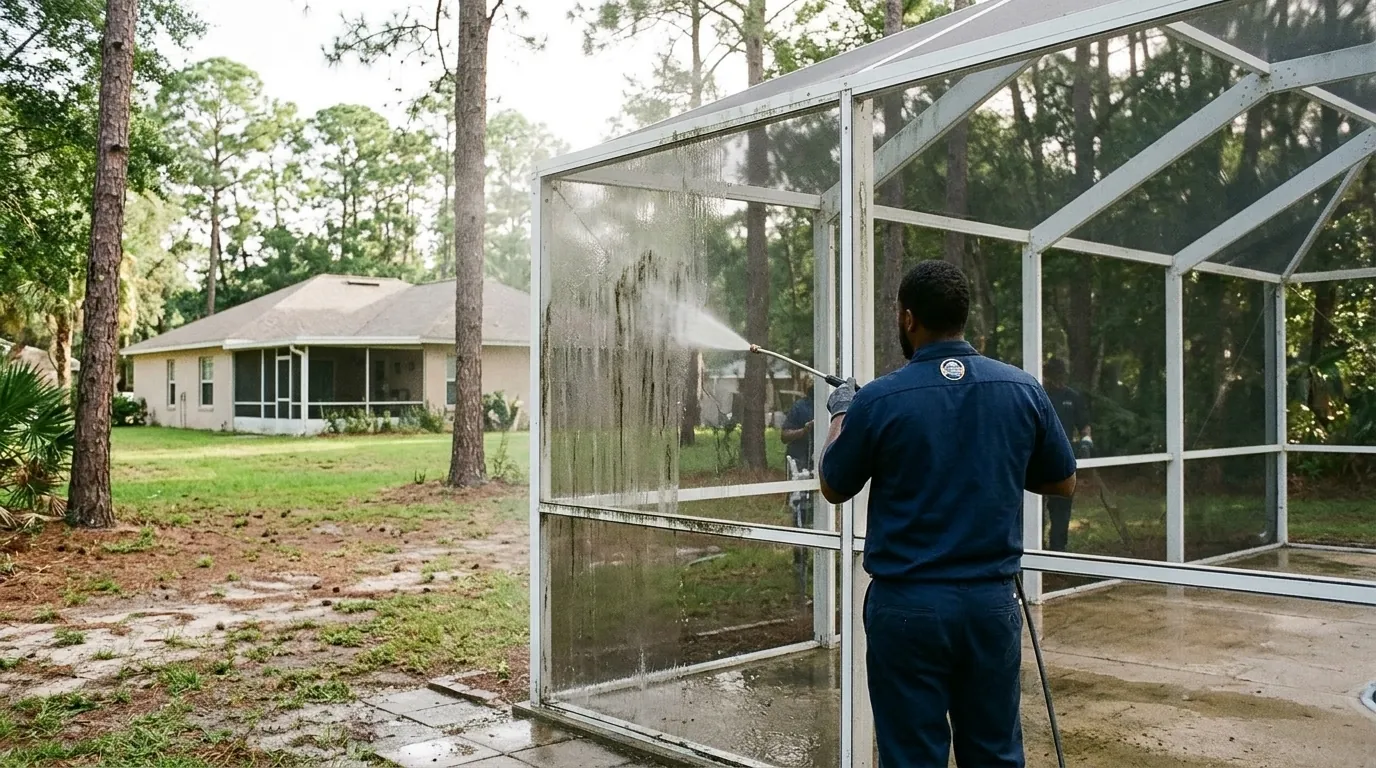
- Plants near the cage are rinsed before and after, and sensitive beds are covered
- Pool equipment and furniture are moved or covered as needed
- Solution is applied from the outside and inside of the cage, top down
- Frames are hand-brushed where mildew has stained the finish
- Everything is rinsed at low pressure, including the deck and kick plates
Mildew grows fastest on the shaded, north-facing sides of a cage and under heavy canopy. Yards under mature oaks also collect pollen, leaf tannin and sap that stain screen. A cleaning every year or two keeps most cages looking good, and more often on cages under trees. Gainesville's leafy neighborhoods, from Oakmont to Mile Run, see plenty of both.
Screen gets the same treatment as the frame. The gray-green film that builds up on mesh is mostly algae, mildew and fine dust, and it cuts the view through the cage more than most people realize until it is gone. A gentle wash with the right solution lifts it out of the weave without scrubbing, which matters because brushing hard across fiberglass mesh can fray the coating and shorten its life. After a cleaning, the screen should look darker and clearer, the way it did when it was new.
When cleaning is not enough
If the screen is brittle and torn, cleaning will not save it, and a heavy wash may finish it off. In that case we recommend replacing the screen first, either panel by panel through screen panel replacement or with a full rescreen, and cleaning the frame at the same time.
Pool Cage Painting in Alachua County: Prep Makes the Job
Most aluminum pool cages come from the factory with a baked-on finish, usually white or bronze. That finish holds up for years, but sun eventually breaks it down. It fades, chalks, and in time wears through to bare aluminum in spots. Aluminum does not rust, but a chalky, faded frame makes the whole back yard look older, and it streaks every time it rains.
A paint job is only as good as its prep. A repaint follows these steps:
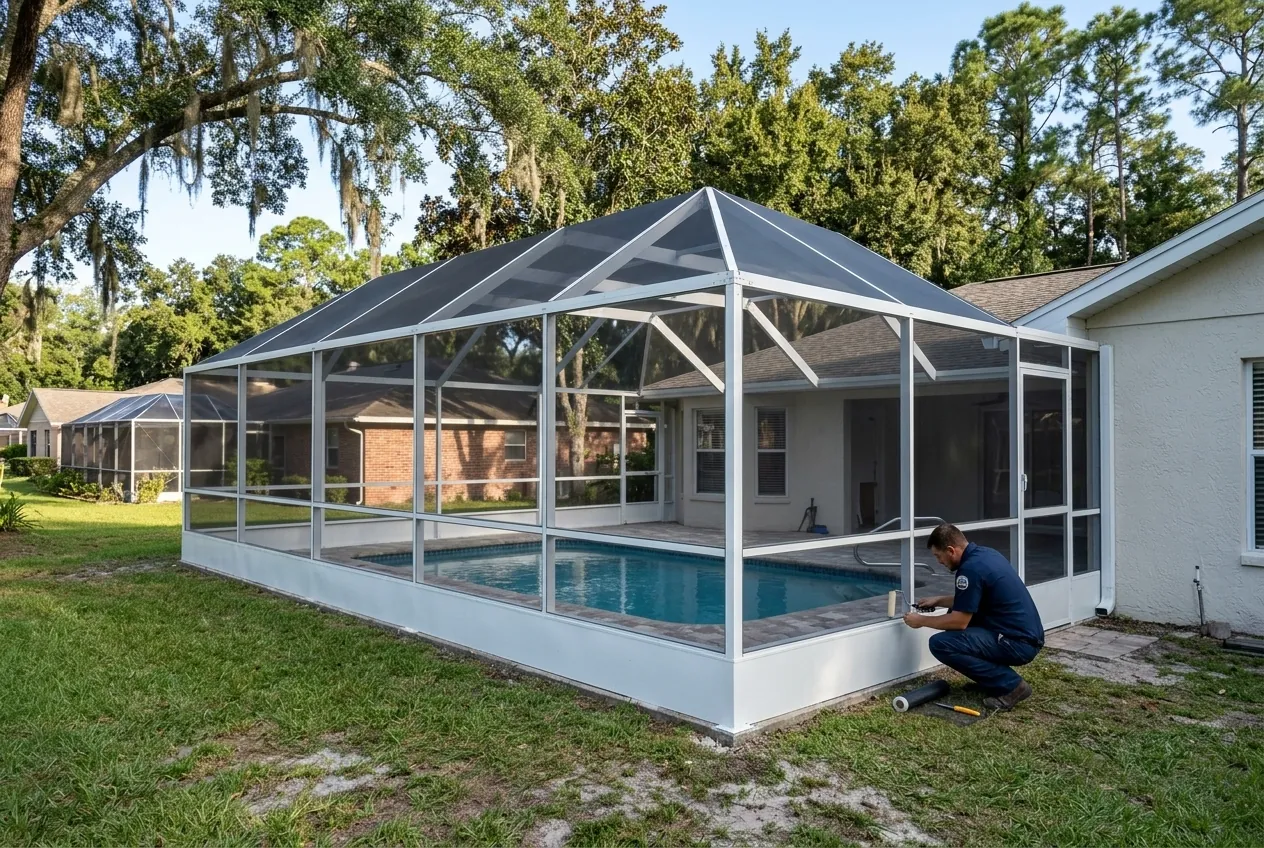
- The frame is washed and degreased to remove chalk, mildew and dirt.
- Glossy areas are lightly scuffed so the new coat can bond.
- Bare aluminum spots and corroded fastener heads are cleaned and primed with a primer suited to aluminum.
- Screen, deck, house walls and pool equipment are masked, unless the screen is being replaced.
- An exterior paint suited to aluminum is applied in even coats, by brush, roller or spray depending on the job.
- Masking comes off, and the deck is cleaned and checked for drips or overspray.
We replace rusty steel screws with stainless before painting, so rust stains do not bleed through the new finish. If frame members are bent or loose, our pool cage frame repair crew fixes them first, because there is no point painting a member that needs to be replaced.
Pool Cage Painting Colors, HOAs and Timing in Gainesville
White and bronze are the most common frame colors, and repainting in the same color is the simplest choice. Changing color is possible, but it takes more coats for full coverage, and in many planned communities it needs approval first. In neighborhoods with an architectural review process, such as Haile Plantation, check your guidelines before choosing a new color. We can provide the paint color and product for your application.
Painting needs dry weather and moderate temperatures. Spring and fall are the most comfortable seasons, since summer afternoon storms can interrupt work and very hot aluminum makes paint harder to apply evenly. Cleaning can be done almost any time of year.
Expect a repaint to take two to four days, based on cage size, prep and how many coats the color needs. A wash is typically a single day. You can use the pool between coats once the paint is dry to the touch, though we ask that nobody lean on freshly painted members or hang towels over them until the finish has had time to harden.
Keeping it clean afterward
A few habits keep a cage looking good longer. Rinse the screen and frame with a garden hose every month or two, especially the shaded sides. Keep sprinklers from spraying the frame, since hard water and iron in well water stain aluminum and screen. Trim back shrubs touching the walls so air can move and mildew has less to work with. And blow leaves off the roof panels before they mat down and stay wet. None of that replaces a professional wash every year or two, but it stretches the time between them.
A clean, freshly painted cage is also a good moment to check the rest of the enclosure. Our blog post on how long pool cage screens last in Florida explains how to tell if your screen is nearing the end of its life. To book a wash or a repaint, send a few photos through the estimate form. Painting and cleaning are part of our pool cage repair work in Gainesville and across Alachua County.
Why Gainesville Calls Us
- Written price agreed before a single panel comes off
- New spline in every channel we rescreen
- Screen type matched to bugs, pets and sun
- Storm damage photographed for your insurer
- Old screen, spline and scraps hauled away
Pool Cage Painting & Cleaning Questions
Straight answers before you call.
(352) 443-5293A soft wash usually runs $600 to $900 for a small to mid-size cage and $900 to $1,400 for a large or two-story cage. Heavy mildew, tall roofs and difficult access push the price up, and a free visit to the house confirms where yours lands.
Yes. High pressure held close to aging fiberglass screen can blow holes through it or push it out of its spline. We use a low-pressure soft wash that lets the cleaning solution do the work.
A wash and repaint typically runs $1,500 to $3,000 depending on cage size, height and how much prep the finish needs. Painting during a full rescreen is the most efficient option because there is no screen to mask.
Every year or two for most cages, more often for cages under heavy tree canopy or on shaded sides where mildew grows fastest. Regular cleaning also makes loose fasteners and small tears easier to spot.
Yes, but it takes more coats for full coverage, and many HOAs require approval for a color change. Check your community's guidelines first. We can provide the color and product for an application.
The aluminum does not rust, but steel screws do. We replace corroded screws with stainless before painting so rust does not bleed through the new finish.
More Gainesville Pool Cage Services
Other work we handle on the same visit.
All services- Screening
Pool Cage Rescreening
Full cage rescreens with new spline, panel by panel. - Screening
Screen Panel Replacement
Torn or bowed panels replaced without a full rescreen. - Screening
Lanai & Patio Rescreening
Screen rooms, porches and patios rescreened. - Screening
Screen Wall Upgrades
No-see-um, pet-resistant, privacy and solar screen. - Frame & Doors
Pool Cage Frame Repair
Bent beams, loose braces, kick plates and gutters fixed. - Frame & Doors
Screen Door Repair
Doors, closers, hinges and latches repaired or replaced. - Frame & Doors
Storm Damage Pool Cage Repair
Wind and fallen-limb damage documented and repaired.
Pool Cage Painting & Cleaning in Gainesville
Mildew off, color back. Price in writing.