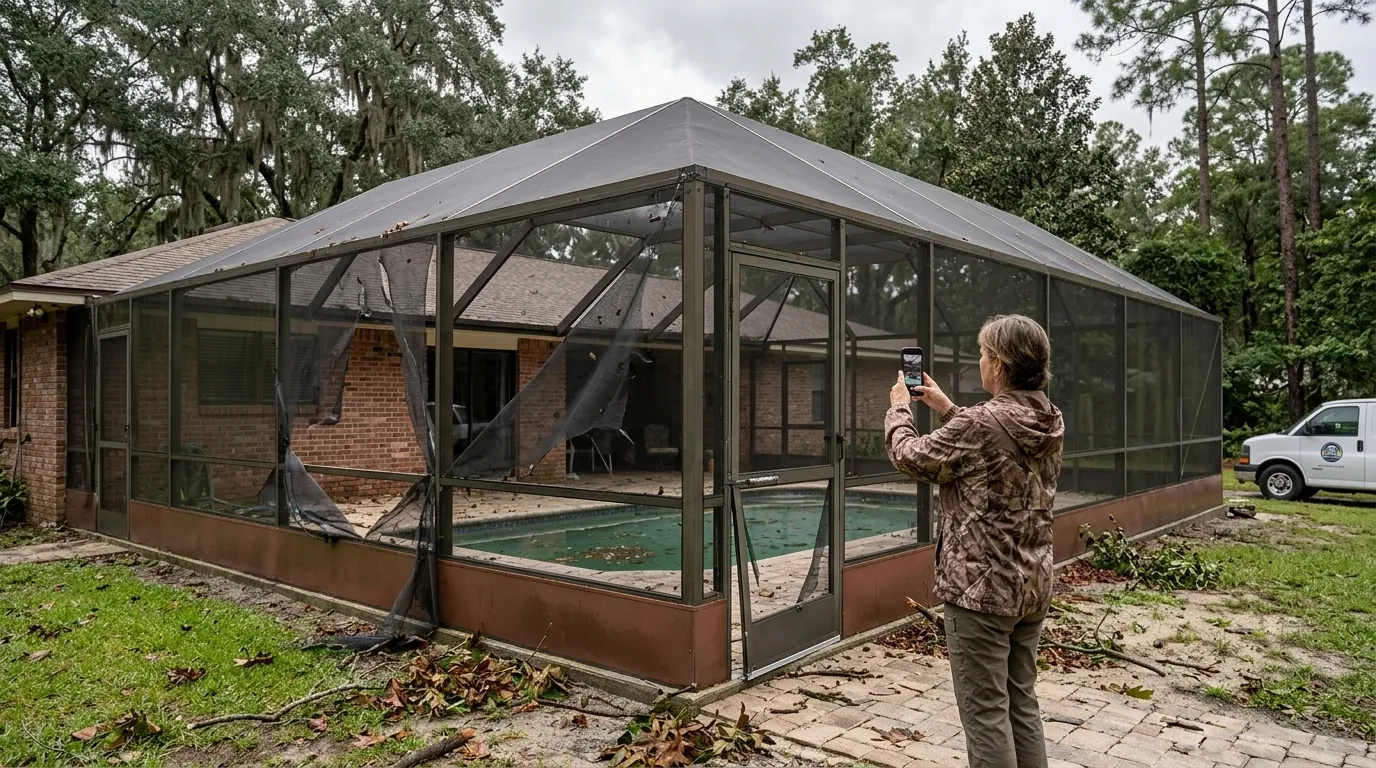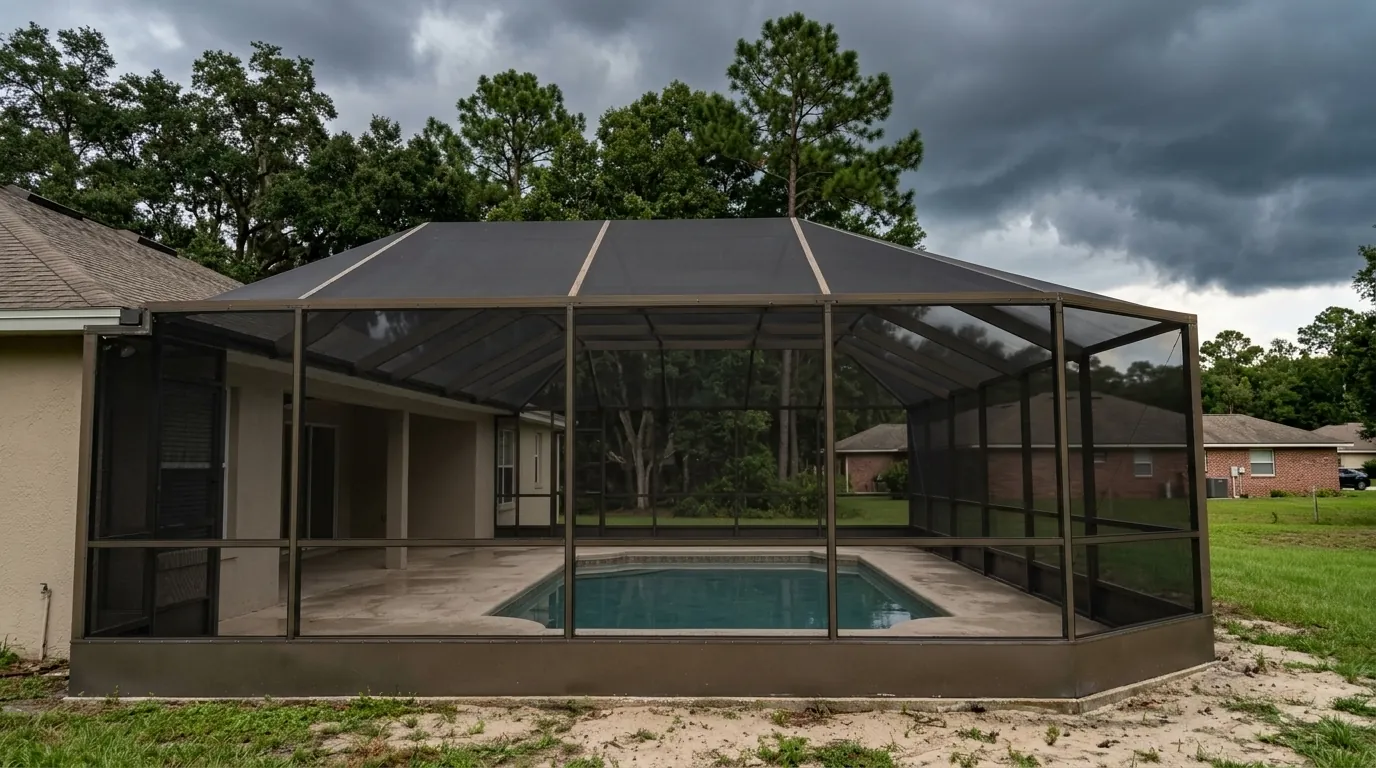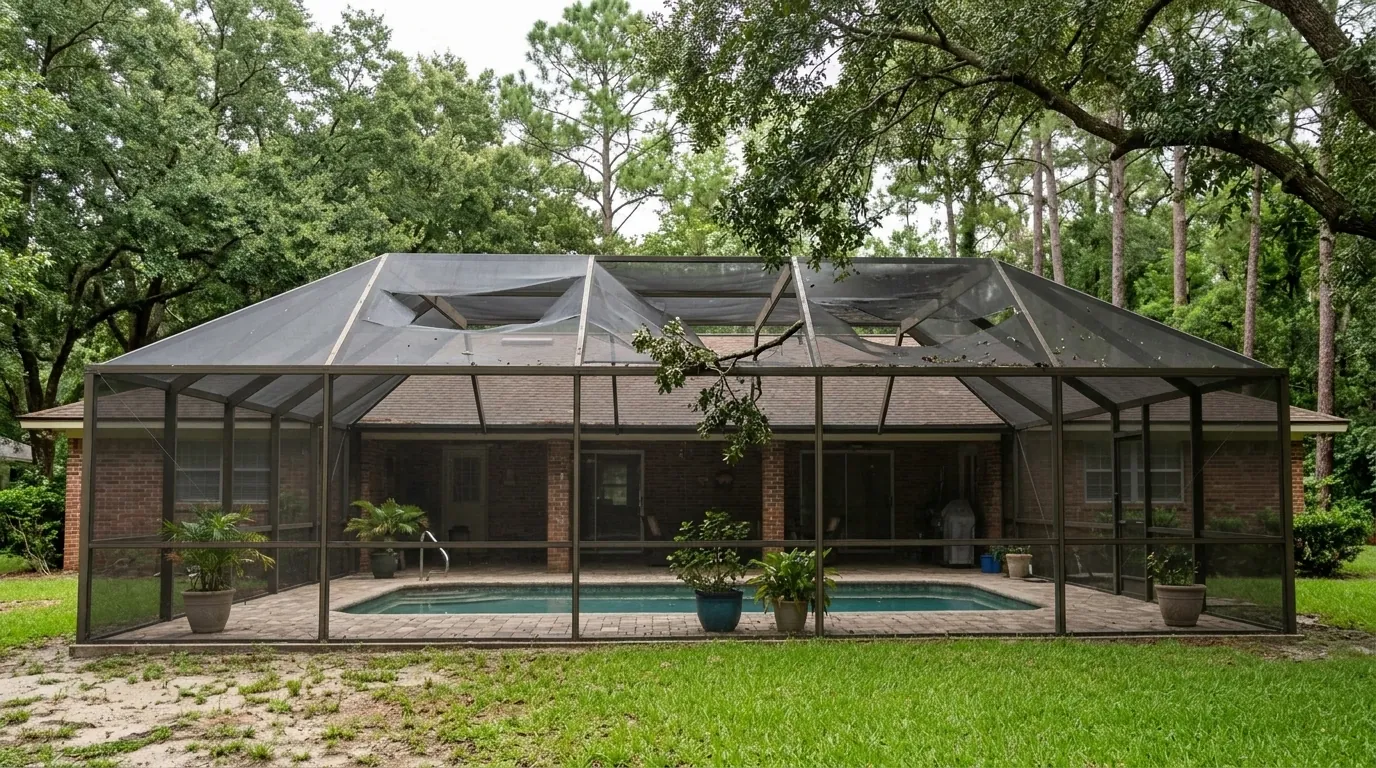
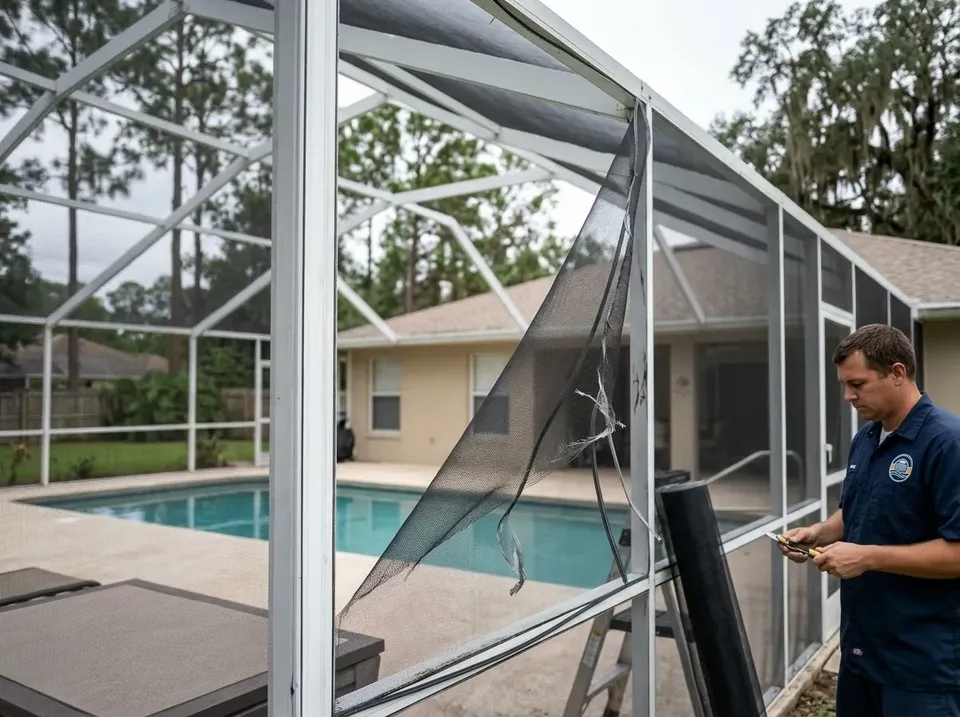
 Storm tore your screen?
 Don't see your street?
On most enclosures, the mesh gives out long before the metal does. The aluminum frame, if it is kept clean and fastened tight, can outlast several sets of screen. So the real question for most owners is not whether they will need a rescreen, but when, and whether they can stretch the time between them. This guide explains what wears screen down in north central Florida and what we look for when we inspect a cage for pool cage repair in Gainesville.
Pool Cage Screen Lifespan in Florida Sun
Phifer, a major U.S. screen maker, frames the difference this way: owners with lower-grade imported screen may end up rescreening every 3 to 4 years instead of every 8 to 10 because the mesh turns brittle or starts to sag. Those numbers come from a manufacturer making a case for its own product, so treat them as a planning guide, not a promise. They line up with the general pattern, though. Good screen installed well tends to last most of a decade, and cheap screen often doesn't.
| Screen | Rough planning life | What usually ends it |
|---|---|---|
| Quality 18/14 fiberglass | About 8 to 10 years | UV breakdown, brittleness, sagging roof panels |
| Low-grade imported screen | As little as 3 to 4 years | Coating failure, early tears, uneven tension |
| Heavy-duty or pet screen | Typically longer than standard | Frame movement, impact damage; TuffScreen carries a 10-year maker warranty |
| Any screen, roof panels | Shorter than wall panels | Direct sun, debris load, standing water on the mesh |
Roof panels nearly always fail first. They take direct sun all day, hold leaves and needles that trap moisture, and catch whatever falls from trees above. It is common to see a cage with sound walls and a roof that is ready to go.
Why the coating matters
Fiberglass pool screen is glass yarn wrapped in a vinyl coating. The glass gives it strength and the vinyl protects the glass. Once years of sun have worn the coating thin, the bare strands flex with every gust and start to snap. That is why faded, chalky mesh is a warning sign and not just a cosmetic issue. The color lives in the coating, and when the color fades, the protection is fading with it.
Why Pool Cage Screens Wear Out Faster in Gainesville
Gainesville sits inland, so salt air is not the main enemy it is on the coast. The local problems are different.
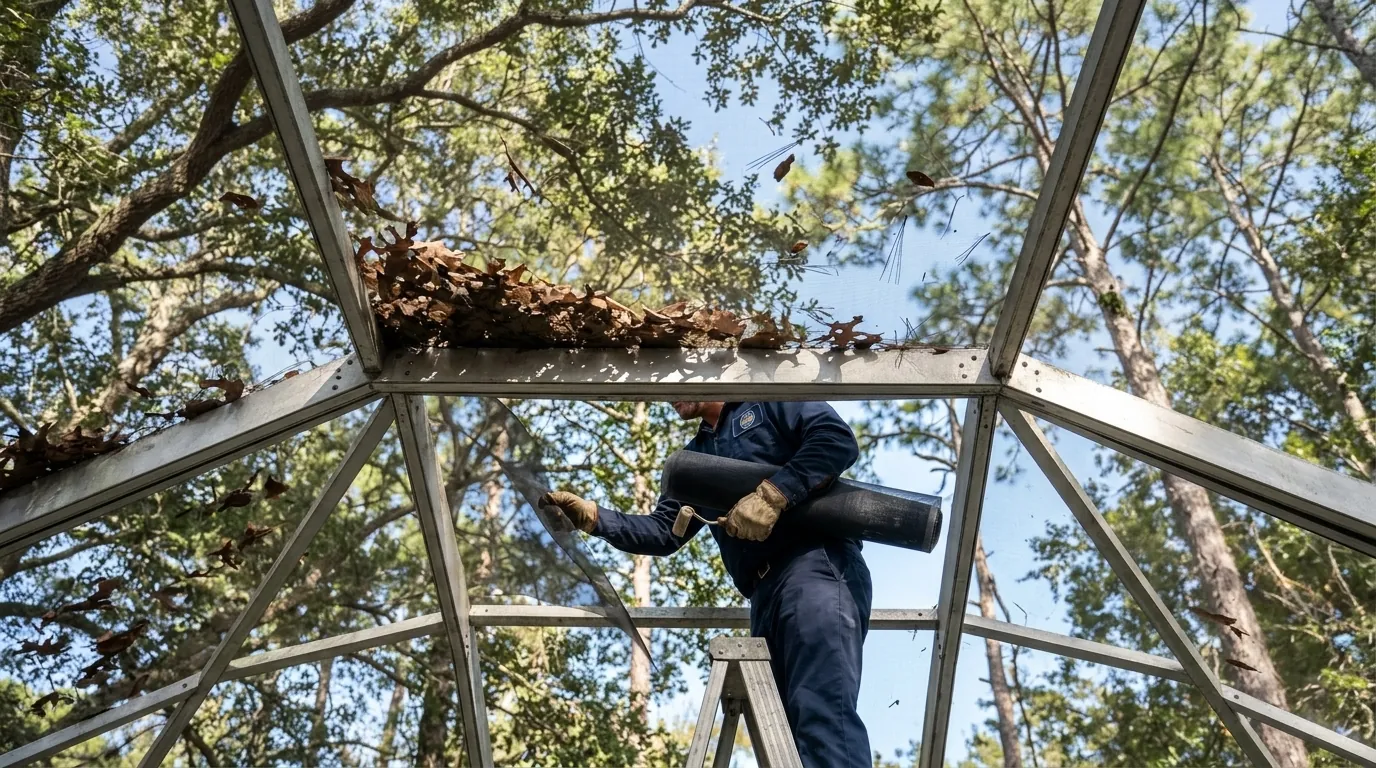
- Tree canopy. Much of the area grows under oaks and pines. Twigs, acorns, pine cones and the occasional dead limb land on cage roofs, and wet leaf mats sit on the screen for weeks.
- Summer storms. Afternoon thunderstorms bring gusts and short bursts of debris. Tropical systems add more: local news coverage of Irma (2017) and Idalia (2023) described widespread fallen trees around the county.
- Shade and mildew. Cages under heavy shade stay damp, and mildew grows on the frame and on dirty screen. That doesn't destroy the mesh by itself but it hides wear until it is advanced.
- Sun-facing walls. West and south walls take the hardest afternoon sun and fade and stiffen before the shaded sides do.
- Lawn irrigation. Sprinkler heads aimed at the cage soak the lower panels on a schedule and leave mineral spots that hold dirt. Turning a head a few degrees keeps the walls drier.
Signs Your Pool Cage Screen Needs Replacing
You can check most of this from the pool deck in a few minutes.
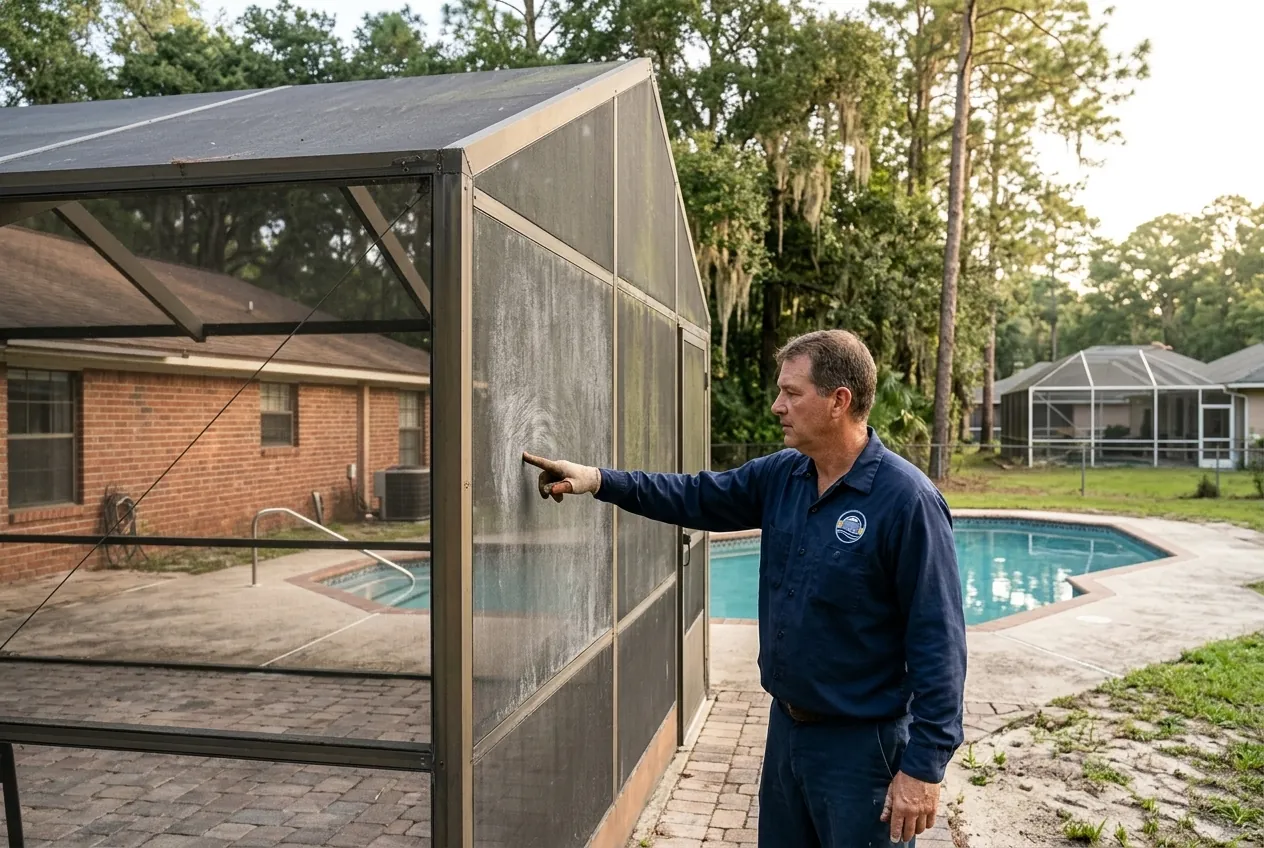
- Press test. Push gently on a wall panel with a fingertip. Healthy screen gives and springs back. Brittle screen crackles, splits or leaves a dent that stays.
- Fading. Compare a sunny wall with a shaded one. Charcoal screen that has turned gray and chalky has lost much of its coating.
- Sagging roof panels. Bellied roof screen holds water and debris and tears faster.
- Spline pulling out. If the rubber spline is shrinking out of the channel corners, panels will start blowing out in the next strong wind.
- Tears spreading. One clean puncture is a repair. Tears that run along the weave or appear in several panels at once point to screen at the end of its life.
Do the press test in more than one spot. A cage can have a brittle west wall and a healthy east wall, and the roof is usually worse than either. Note which areas fail so an estimate can target them instead of assuming the whole cage is in the same shape.
If only a few panels show problems, screen panel replacement buys time. If most of them fail the press test, a full pool cage rescreening is the better spend. For help with that call, read our repair vs. rescreen breakdown.
Pool Cage Screen Maintenance That Adds Years
Simple upkeep won't stop the sun, but it slows everything else down.
- Rinse, don't blast. Phifer advises cleaning vinyl-coated screen with a mild soapy solution and avoiding hard scrubbing. A pressure washer held close can tear old screen and blow spline out of the channel.
- Keep the roof clear. Brush or blow leaves off the roof after heavy drop seasons. A wet mat of oak leaves is extra weight and holds moisture against the mesh.
- Trim overhanging limbs. Branches that rub or hang over the cage are the most common source of roof punctures.
- Fix small tears early. Wind pulls a small hole into a split across the panel. Replacing one panel now beats replacing four later.
- Watch the lower walls. Move chairs and grills off the screen, and consider heavier screen where pets push.
- Look after the frame. Loose screws and braces let the frame flex, which loosens screen. A cage wash and repaint also clears the mildew that hides problems.
Does screen type change the lifespan?
Yes. Phifer names its PetScreen and TuffScreen as its most durable products, and heavier vinyl-coated polyester generally shrugs off impacts that would puncture fiberglass. They cost more per panel, so many owners use them where the wear happens and standard screen everywhere else. See pool cage screen types explained for the full comparison.
Pool Cage Spline, Frame and Door Wear
Screen gets the attention, but three other parts set how long a rescreen stays tight.
- Spline. The rubber cord that locks mesh into the channel shrinks and hardens with heat and sun. When it pulls back from the corners, a strong gust can pop the whole panel out. New spline goes in with every rescreen, and loose spline on a few panels can be redone without new screen.
- Frame. Aluminum doesn't rust the way steel does, but fasteners corrode, paint chalks and braces work loose over time. A frame that racks in wind keeps loosening screen no matter how good the mesh is.
- Doors. Closers wear out, hinges sag and latches stop catching. A door that slams or drags tears its own screen and stresses the frame around it. Our screen door repair page covers those fixes.
A simple yearly screen check
| Time of year | What to check | Why then |
|---|---|---|
| Late winter | Rinse pollen and grime; press-test sunny walls | Before heavy spring pollen and before storm season |
| Late spring | Tighten braces and screws; trim limbs over the roof | Ahead of summer storms and hurricane season |
| After any big storm | Walk the cage for tears, popped spline and bent members | Small damage spreads quickly in the next wind |
| Fall | Clear leaf mats from the roof; check doors and closers | Leaf drop and cooler, drier weather for repairs |
Pool Cage Screen Life Across Gainesville Neighborhoods
Screen wears at different speeds depending on the lot. Cages in mature neighborhoods with tall canopy, such as Brywood and Mile Run inside the city, tend to wear out through debris and shade. Cages on open lots in places like Archer or Alachua see more full sun and wind, so fading and brittleness set the clock. Either way, the inspection is the same, and it only takes a few minutes.
When you're ready to price it, our pool cage rescreen cost guide lays out typical ranges, or you can request a free estimate for your own cage.