
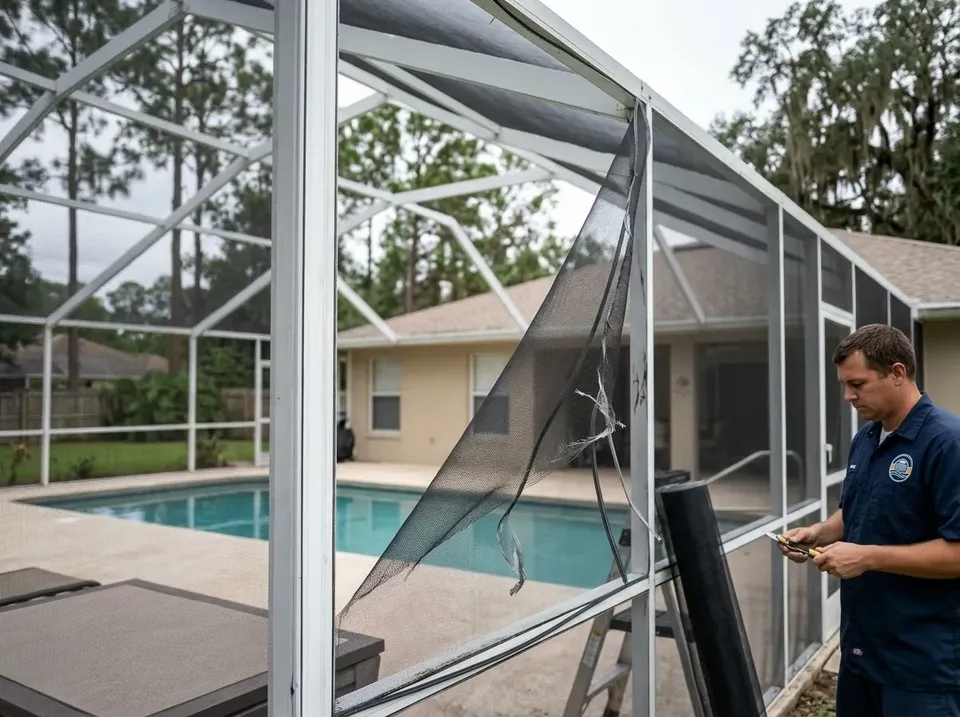
 Storm tore your screen?
 Don't see your street?
Screening · Gainesville & Alachua County, FL
Pool Cage Rescreening in Gainesville, FL
A full rescreen strips every tired panel off the cage, cleans the channels, swaps rusted screws and rolls in new mesh and new spline one bay at a time. You get the screen type, panel count and price in writing before the first panel comes off.
Pool Cage Rescreening in Gainesville, FL, Done Panel by Panel
A pool cage is really two things: an aluminum skeleton and a skin of screen stretched across it. The skeleton can last for decades if nobody drops a tree on it. The skin cannot. Florida sun bakes the vinyl coating off fiberglass mesh, the rubber spline that holds each panel in its channel hardens and shrinks, and sooner or later the roof starts to sag, the walls start to flutter and the first tears show up. A full rescreen replaces all of that skin at once, so every panel starts the clock again on the same day.
Rescreening is the most common job we price, and it is usually the better value once a cage has more than a handful of bad panels. Patching ten or twelve panels on a screen that is already chalky and brittle tends to buy a year or two before the neighbors of those patches start to fail. If only a few panels are torn and the rest still feel supple, our screen panel replacement service is the cheaper fix, and we will say so at the estimate.
What a full rescreen includes
- Removal of every old panel and all old spline, bagged and hauled away
- Channels cleaned of grit, dried mildew and broken spline fragments
- Rusted or stripped screws replaced so the frame stays tight
- New mesh rolled into each bay with new spline sized to the channel
- Roof panels tensioned so they shed water instead of pooling it
- Kick plate and door panels done to match, plus a final rinse of the deck
Gainesville Pool Cage Rescreening Cost by Cage Size
A full rescreen in the Gainesville area typically runs $1,800 to $5,500. A small single-story cage of around 1,000 square feet of screen with a simple gable or hip roof sits near the bottom of that range. A large two-story cage, a mansard roof with lots of small bays, or an enclosure that wraps a long lanai pushes toward the top. The price is driven far more by panel count and roof height than by the footprint of the pool.
| Job | Typical range | What moves the price |
|---|---|---|
| Small cage, single story, standard 18/14 | $1,800 – $2,800 | Under about 1,000 sq ft of screen, simple roof |
| Mid-size cage, single story | $2,800 – $4,000 | Panel count, number of doors, kick plate height |
| Large or two-story cage | $4,000 – $5,500 | Roof height, scaffolding, mansard or dome bays |
| Upgrade to no-see-um, pet or solar screen | +$15 – $45 per panel | Mesh type and which walls get it |
| Walls only, roof kept | Quoted per panel | Condition of the roof screen we are leaving |
| Screw and fastener replacement | Usually included | Extra only when large runs are stripped or seized |
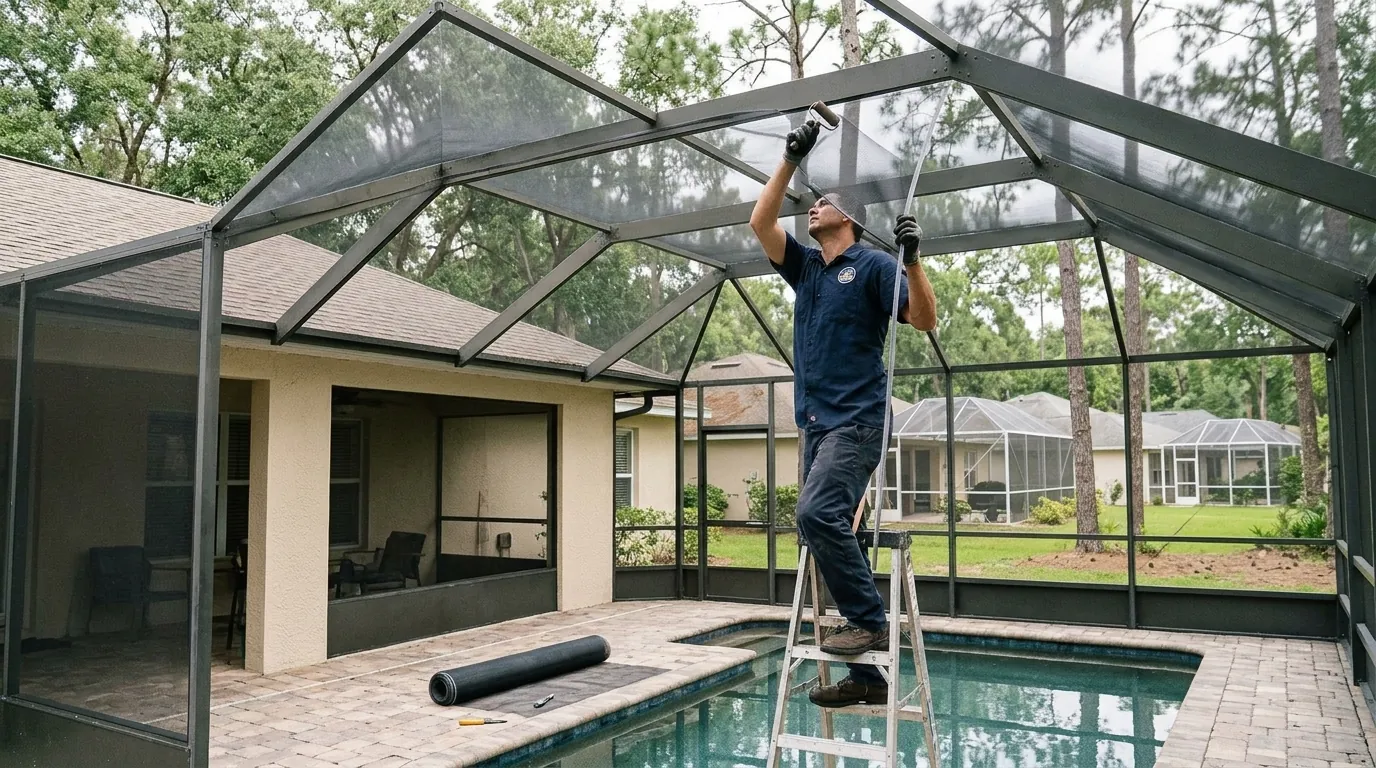
Two things raise a quote that homeowners do not always expect. The first is height: a cage that ties into a second-story roofline needs taller ladders or staging, and the top bays take longer to tension. The second is how many small panels the design has, because a mansard roof with angled bays has far more corners to cut and roll than a flat gable. Our blog post on what it costs to rescreen a pool cage in Gainesville breaks those numbers down further.
Choosing Screen for a Pool Cage Rescreen in Alachua County
Most cages around town are rescreened with 18/14 charcoal fiberglass. The numbers describe the weave: 18 strands per inch one way and 14 the other. It is the standard pool and patio mesh because it lets a lot of air through, keeps out mosquitoes and flies, and is tough enough to ride out windblown leaves. Charcoal is the color most people choose because it is the easiest to see through from inside the cage.
Some walls benefit from something different. A 20/20 no-see-um mesh has a tighter weave that stops the tiny biting midges common near wetlands and creeks, with a small trade-off in airflow. A heavier 17/14 fiberglass uses a thicker strand that holds up better to debris and wear. Vinyl-coated polyester pet screens resist claws far better than any fiberglass. Solar screens cut glare and heat on the west wall, and vinyl-laminated privacy panels are made for lower walls, not roofs. The screen wall upgrades page covers each option and when it earns its extra cost.
How a Full Pool Cage Rescreen Is Done
Order matters on a rescreen. The roof is usually done first, because anything dropped while working overhead lands on the walls and deck below, and new wall screen should not be the thing it lands on. Each bay is stripped, the channel is cleaned out with a pick and brush, and the new mesh is laid across the opening with a little extra on every side.
- The old spline is pulled and the old panel is cut free and rolled up for disposal.
- Channels are cleared of grit and rubber crumbs so the new spline seats fully.
- Mesh is laid square to the frame, then the first side is rolled in with spline.
- The opposite side is rolled while the screen is drawn snug, then the remaining two sides.
- Excess mesh is trimmed along the outside edge of the channel with a sharp blade.
- Every panel is checked by hand for even tension and any loose screws are replaced.
Spline is sized to the channel and to the screen being installed. Household window frames use thin cord, often around .125 to .175 inch. Pool enclosure channels take a much heavier spline, commonly in the .250 to .315 inch range, and a thicker pet or solar mesh may need a size smaller than standard 18/14 in the same channel. Getting that match right is what keeps a panel from popping out in the first strong gust.
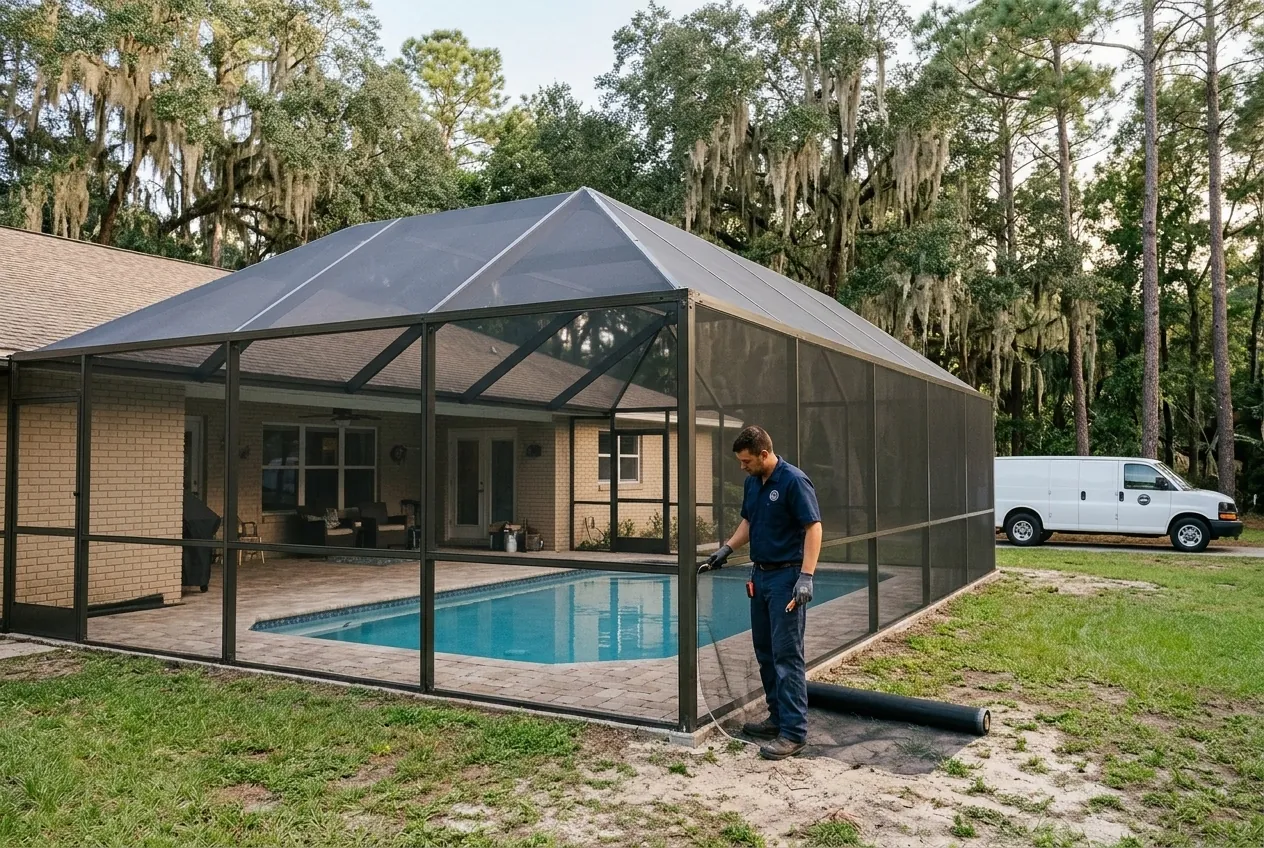
Tension is the other half of the craft. Roll a roof panel too loose and it bellies down, holds rain and oak leaves, and stretches more every storm. Roll it drum-tight and the screen pulls the spline out of the corners or bows the purlins. A good panel is snug enough to shed water and debris but still gives slightly under a flat hand.
Rescreening Your Pool Cage in Gainesville: Signs It Is Time
The Gainesville climate is hard on screen. Long, bright summers break down the coating on fiberglass mesh, and the roof panels facing south and west fail first because they take the most sun. Heavy oak and pine canopy adds weight on top: live oak leaves and catkins in spring, acorns in fall, pine needles and twigs all year, and the odd falling limb after a summer thunderstorm. Fiberglass screen in this climate commonly lasts somewhere between eight and fifteen years, and less under heavy canopy. Our guide to how long pool cage screens last in Florida goes deeper on what speeds up the wear.
- Screen feels stiff or chalky and cracks when pressed with a thumb
- Roof panels sag and hold puddles or piles of leaves after rain
- Spline has shrunk out of the corners or is hanging loose along a beam
- Several tears have appeared in different parts of the cage within a season
- Patched panels are visibly darker or tighter than the original screen around them
Not sure whether to patch or rescreen? Our article on whether to repair or rescreen your pool cage lays out the math. As a rough rule, once a third or more of the panels need work, a full rescreen is close to the same money and leaves everything matching.
Pool Enclosure Rescreening Rules, HOAs and Timing
Replacing screen on an existing cage is generally treated as maintenance rather than new construction, but the building department that covers your address makes that call. The City of Gainesville and Alachua County run separate permitting offices, and towns such as Newberry and Alachua have their own processes too. We check before work starts. If the frame needs structural repair along with the rescreen, that part is handled under our pool cage frame repair service and may need its own review.
Homeowners associations are the more common hurdle. Planned communities such as Haile Plantation often have architectural guidelines that cover screen color, frame color and sometimes privacy panels. If your association asks for an application, we will put the mesh type, color and scope in writing so you can attach it.
Rescreening can be done any month, but booking in late winter or spring means you head into hurricane season with fresh screen and tight spline. A full rescreen on a typical cage takes one to three days, and the pool stays usable in the evenings. To get on the schedule, send photos or book a walk-through from the free estimate form. Rescreening is the backbone of our pool cage repair work across Gainesville and the surrounding towns.
Pool Cage Rescreening Gainesville FL Questions
Straight answers before you call.
Most full rescreens run $1,800 to $5,500. A small single-story cage with a simple roof lands near the low end, while a two-story or mansard cage with many small bays lands near the top. Upgrading some walls to no-see-um, pet or solar screen adds $15 to $45 per panel. You get a fixed written price before work starts.
Most cages take one to three days. A small cage with a gable roof can often be finished in a day, while a large or two-story enclosure takes longer because of staging and the number of roof bays. Rain stops roof work for safety, so a summer job may stretch around afternoon storms.
Yes. Every panel gets new spline sized to the channel and the screen being installed. Reusing old spline is a false saving, because hardened rubber does not grip well and is the most common reason new screen pulls loose early.
Usually yes, in the evenings after the crew leaves. During the day the roof bays are open, and debris can fall into the water, so we skim and rinse the deck at the end of each day. If a pool cleaner is scheduled, let them know a rescreen is underway.
Rescreening an existing cage is usually treated as maintenance, but the City of Gainesville, Alachua County and the surrounding towns each have their own building departments. We check the rule for your address before starting. Structural frame work may need its own permit.
If only a few panels are torn and the rest of the screen is still flexible, replace the bad ones. If the screen is brittle and tears keep appearing, or a third or more of the panels need work, a full rescreen is close to the same money and every panel will match.
More Gainesville Pool Cage Services
Other work we handle on the same visit.
Screen Panel Replacement
Torn or bowed panels replaced without a full rescreen.
Lanai & Patio Rescreening
Screen rooms, porches and patios rescreened.
Screen Wall Upgrades
No-see-um, pet-resistant, privacy and solar screen.
Pool Cage Frame Repair
Bent beams, loose braces, kick plates and gutters fixed.
Screen Door Repair
Doors, closers, hinges and latches repaired or replaced.
Storm Damage Pool Cage Repair
Wind and fallen-limb damage documented and repaired.
Pool Cage Painting & Cleaning
Frames washed and repainted, mildew gone.
Pool Cage Rescreening in Gainesville, Priced in Writing
New screen, new spline. One fixed price.