 Storm tore your screen?
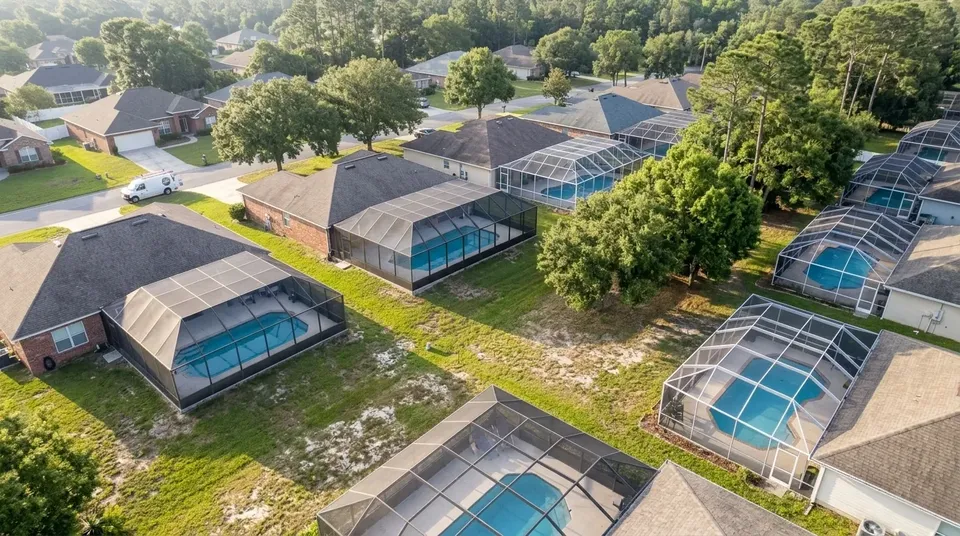 Don't see your street?
We repair cages, we don't sell or interpret insurance, so read this as a general overview and not legal or insurance advice. Your policy wording and your agent have the final say. What we can do is explain the pieces that come up most often when Gainesville owners ask whether a claim is worth filing, and point you to the Florida agencies that publish consumer guidance. For the repair side, start with our main page on pool cage repair in Gainesville FL.
Homeowners Insurance and Pool Cage Damage: The Basics
Property policies generally pay for sudden, accidental damage from a covered peril, such as wind or a falling tree. They generally don't pay for wear, deterioration or lack of maintenance. That one distinction decides a lot of pool cage claims.
| Cause of damage | Often covered? | What to check |
|---|---|---|
| Wind or hurricane | Often, subject to the hurricane deductible | Screen enclosure exclusions, caps or endorsements |
| Tree or limb falling on the cage | Often, when caused by a covered peril | Any cap on tree-related claims |
| Brittle, faded or sagging screen | Usually not | Wear and tear exclusions |
| Corroded fasteners, chalky paint | Usually not | Maintenance exclusions |
| Flood water | Not under a standard homeowners policy | Separate flood policy |
| Pets or kids tearing panels | Usually not worth claiming | Deductible vs. repair cost |
The Florida Office of Insurance Regulation notes that flood damage is not typically covered by a homeowners policy and has to be bought separately or as an endorsement. Rising water is rarely what wrecks a cage, but it is worth knowing where the line sits.
How Florida Policies Treat Screen Enclosures
This is where policies differ most. Some treat a pool cage attached to the house as part of the dwelling. Some treat it as an other structure with its own limit. Some exclude or cap hurricane and windstorm damage to screened enclosures, and some insurers offer an endorsement that adds that coverage back for an extra premium, usually with a separate limit. There is no single Florida answer, which is why the policy itself matters more than anything a neighbor or contractor tells you.
When you review your policy, look for these items:
- Any mention of "screened enclosure," "screen enclosure" or "aluminum framed" structures in the exclusions and endorsements.
- Whether the cage falls under dwelling coverage or other structures coverage.
- A dollar cap specific to screen enclosures.
- Your hurricane deductible and your all-other-perils deductible.
- Any tree or debris removal limits.
Pool Cage Damage and Your Hurricane Deductible
Florida Statute 627.701 requires insurers to offer hurricane deductible options of $500, 2 percent, 5 percent and 10 percent of the dwelling limit, with some exceptions for higher-value homes. The hurricane deductible applies on an annual basis, across all hurricane losses in a calendar year under policies from the same insurer or insurer group.
Here is why that matters for pool cages. On a home insured for $300,000, a 2 percent hurricane deductible is $6,000. A full pool cage rescreen in Gainesville typically runs $1,800 to $5,500, and storm repairs to a few panels or a door cost far less. In that situation, hurricane damage to the cage alone may never reach the deductible. If the same storm also damaged the roof, the totals change, and the deductible counts once for the season.
Run the numbers before filing
Get a written repair estimate first. If the price is well under your deductible, a claim may not pay anything. If it's close, or other parts of the house were also damaged, talk to your agent about how the claim would be handled. Our rescreen cost guide gives typical ranges so you can estimate before anyone visits.
Pool Cage Insurance Scenarios Gainesville Owners Run Into
A few hypothetical examples show how these rules interact. They are illustrations, not predictions of how any insurer will handle a claim.
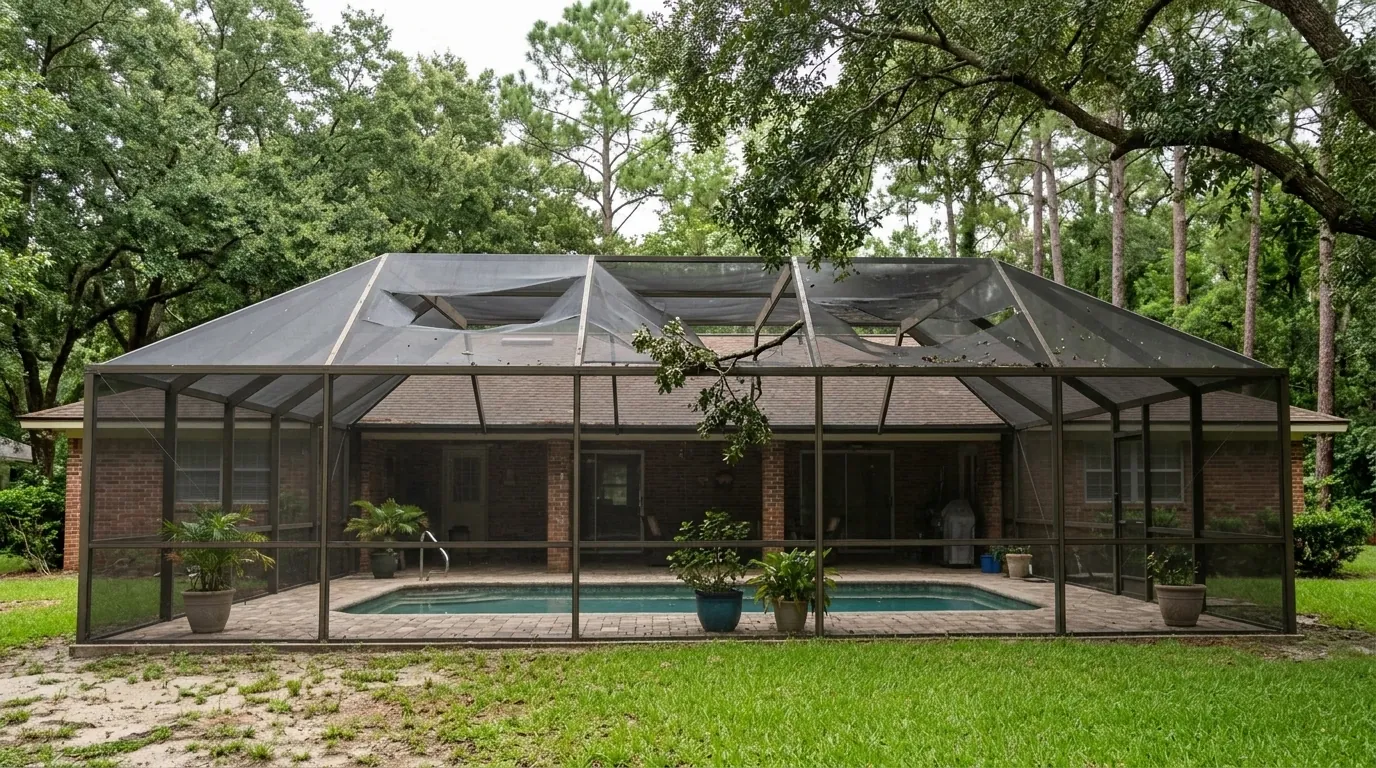
- A limb in a summer thunderstorm. A non-hurricane storm drops an oak limb through four roof panels and bends a purlin. Your regular all-other-perils deductible applies, which is often far lower than a hurricane deductible. If the repair runs well above that deductible and your policy covers the enclosure, a claim may be worth discussing with your agent.
- Hurricane damage to the cage only. A named storm tears out a dozen panels and bends a door. The repair is a few thousand dollars, but the 2 percent hurricane deductible on the home is higher. In that case the claim may pay nothing, and paying directly for the repair is often simpler.
- Hurricane damage to the house and cage. The same storm also damages the roof. Now the combined loss may exceed the deductible, and the cage becomes part of a larger claim, subject to any enclosure exclusion or cap in the policy.
- Old screen that finally gives out. Faded, brittle mesh splits in an ordinary breeze. That is generally treated as wear, not a covered loss, and is a straightforward rescreen.
Questions to ask your agent
- Is my pool cage covered for hurricane and windstorm damage, or excluded?
- If covered, is there a separate limit for the screen enclosure?
- What are my hurricane and all-other-perils deductibles in dollars, not just percentages?
- Would an enclosure endorsement make sense for my home, and what would it cost?
Filing a Pool Cage Insurance Claim in Florida
The Florida Department of Financial Services publishes consumer guidance for homeowners after a loss. Its main points, applied to a pool cage:
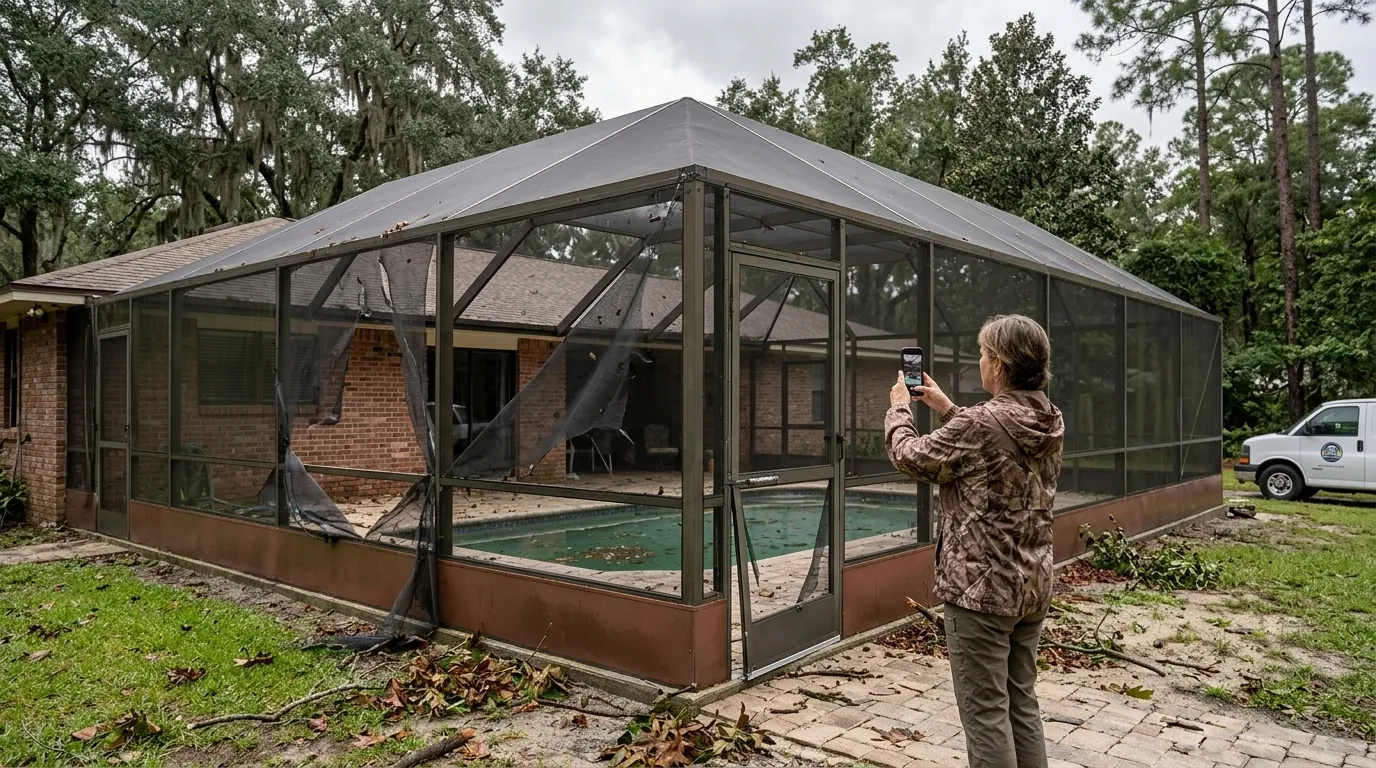
- Document first. Capture pictures and video of every damaged panel and member, then again once repairs are complete.
- Prevent further damage. Make emergency repairs needed to stop more damage, and document them.
- Keep receipts. Save receipts for repairs and emergency work.
- Know the insurer's timelines. DFS says insurers have 7 days to acknowledge a claim, and within 60 days of filing should pay, pay the undisputed portion or deny in writing.
- Report on time. Florida Statute 627.70132 gives you one year from the date of loss to notify the insurer of a new or reopened claim, and 18 months for a supplemental one.
One more Florida rule to know: under Florida Statute 627.7152, an attempt to assign post-loss benefits under a residential property policy issued on or after January 1, 2023 is void. In practice, you deal with your insurer directly, and the contractor works for you. Be cautious of anyone who asks you to sign over your claim.
Keep a simple pool cage file
Keep a folder with any permit or installation paperwork for the cage, the screen type and the date it went in, receipts from past rescreens and repairs, and a set of dated photos taken each spring. When an adjuster asks how old the screen was, or whether damage was there before the storm, that folder answers the question. It also helps with repair pricing, since knowing the screen product and its age tells a crew what will match.
How We Help With Pool Cage Insurance Paperwork
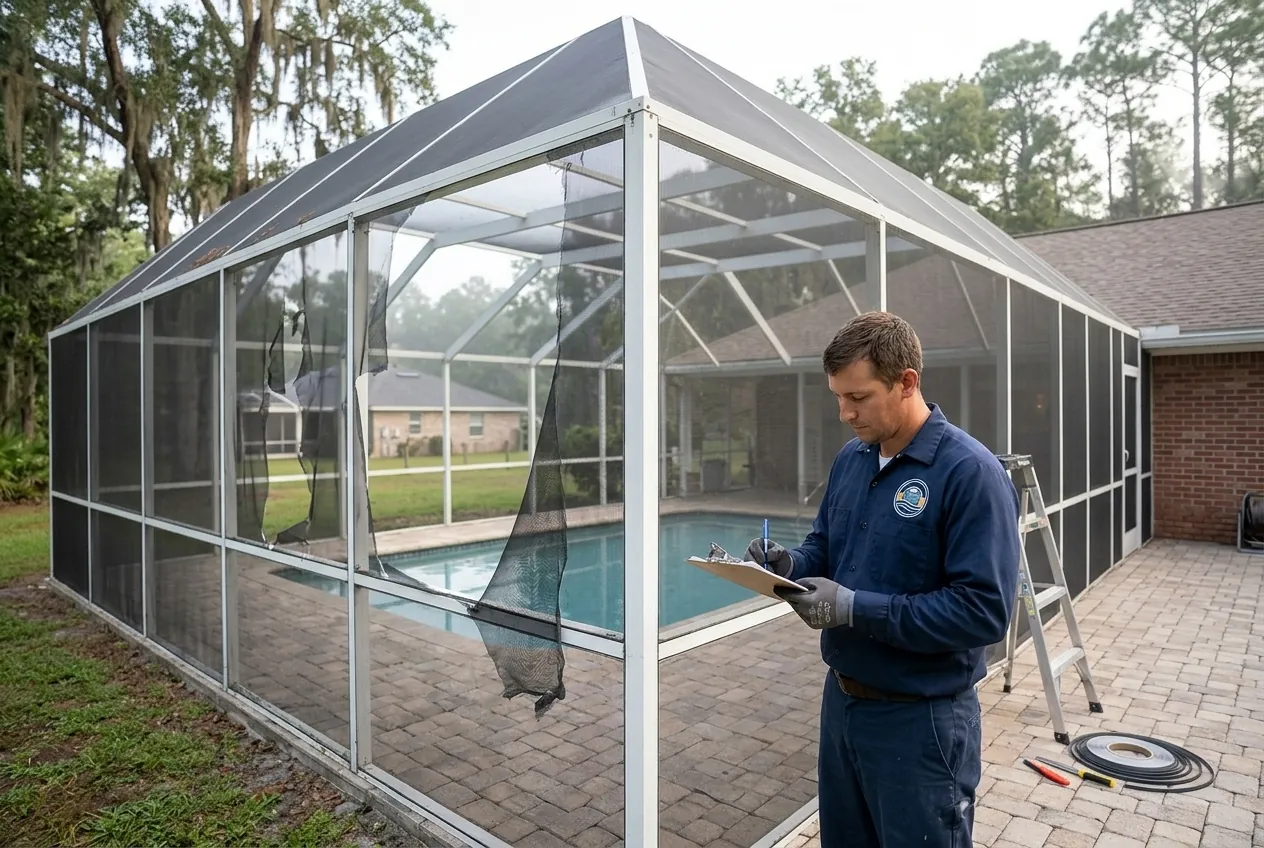
We don't negotiate claims or act as a public adjuster. What we do is give you the records an adjuster needs: dated photos, a list of damaged panels and members, and a written, itemized repair price that separates storm damage from existing wear. Our storm damage pool cage repair process starts with that documentation, and frame work is priced under pool cage frame repair so it's clear what is structural and what is screen.
Local factors also shape claims. Many homes in unincorporated parts of the county, such as Tioga and Kanapaha, sit under mature trees, so the typical damage is a limb strike rather than wind failure. Owners in Alachua and other towns on more open land see more straight wind damage. Either way, getting your pool cage ready for hurricane season, including a set of before photos, puts you in a better spot if you ever need to file.
For a documented, itemized repair price, request a free estimate. If the damage is mostly old wear rather than storm damage, we'll tell you that too.