 Storm tore your screen?
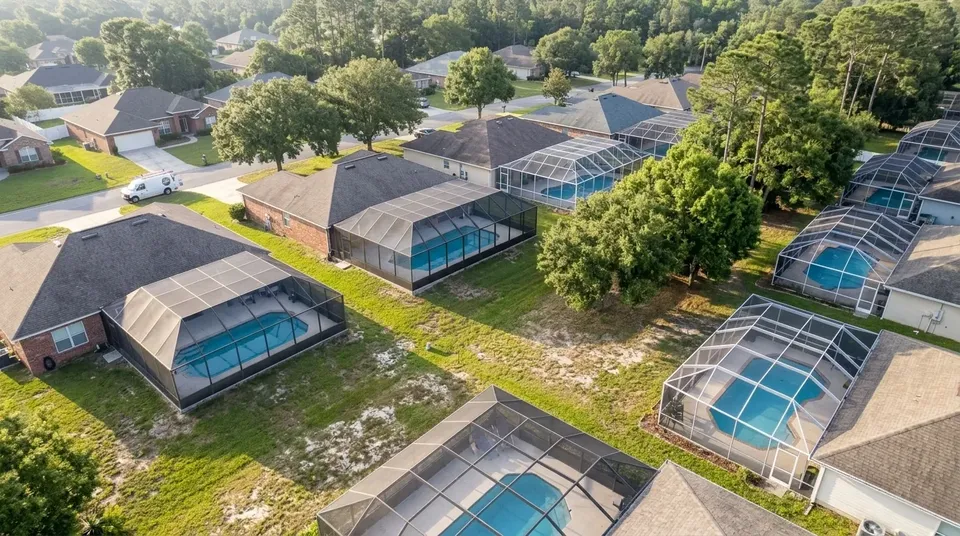 Don't see your street?
Gainesville is inland, which spares it the storm surge coastal towns face, but tropical systems still reach Alachua County with strong gusts and a lot of falling wood. News reports after Irma in September 2017 and Idalia in August 2023 described toppled trees and long power outages in and around the city. For pool cages, that means two separate risks: wind loading on the frame, and limbs or whole trees landing on the roof. Good prep handles both. This guide covers what we tell owners who call about pool cage repair in Gainesville FL as a storm approaches.
Should You Cut Pool Cage Screens Before a Hurricane?
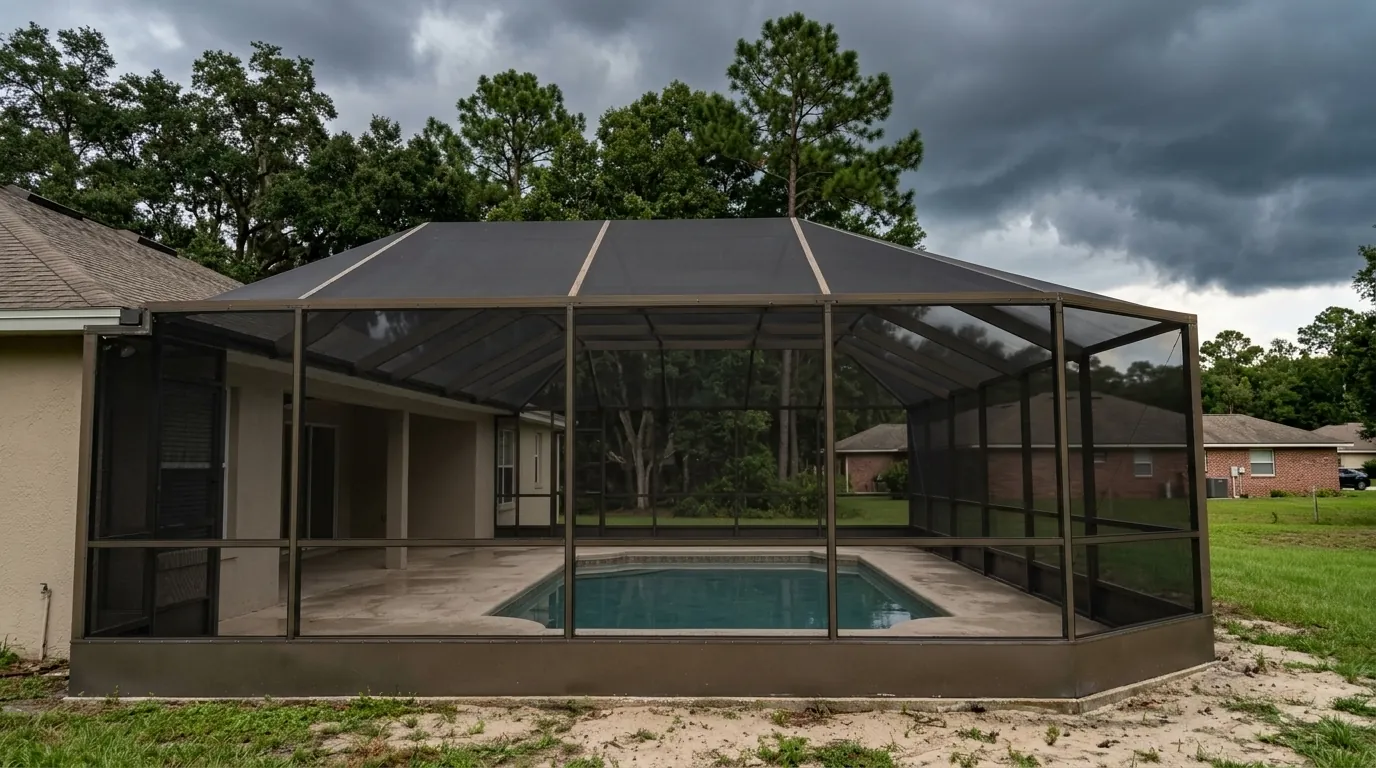
Usually not. Under the Florida Building Code, structural members supporting screened enclosures are designed for wind loads in two directions, and the code accepts the Aluminum Association of Florida's Guide to Aluminum Construction in High Wind Areas as conforming engineering practice. In plain terms, a permitted cage is engineered to stand with its screen in place.
The code does include a specific exception, called the screen removal alternative in Section 2002.7. It only applies to enclosures that were designed for it from the start. Under that method:
- The engineering submitted with the building permit has to identify which panels are to be removed or cut.
- Those panels must be labeled on the structural members next to them.
- Removing or cutting them must not require a ladder or scaffolding.
- Screen designated to be cut must be completely cut when wind speeds are forecast to exceed 75 mph.
- The contractor has to provide replacement screen for the cut panels and give written notice to the owner and the building department.
If your cage was built under that method, follow its labels and the instructions you were given. Older cages may have no engineering on file at all. That doesn't make slashing screen a good idea; it makes a frame inspection more important. If your cage wasn't designed for removal, there is no code basis for slashing random panels, and a sliced panel can flap and whip in the wind, tearing neighbors and leaving you with a bigger rescreen bill afterward.
How to tell which kind of cage you have
- Look for labels on the beams beside specific panels marking them for removal or cutting.
- Check your closing papers or permit records for the enclosure's engineering drawings.
- Ask the company that built the cage, if you know who it was.
- If you can't find anything, assume the cage was designed with screens in place and leave them alone.
Pool Cage Hurricane Prep Checklist
Most of the useful work happens days or weeks before a storm, not the night before.
| When | Task | Why it matters |
|---|---|---|
| Start of season | Tighten loose screws, braces and kick plates | A loose frame flexes and fails before a tight one |
| Start of season | Trim limbs overhanging the cage roof | Falling wood causes more cage damage here than wind alone |
| Start of season | Replace torn panels and fix loose spline | Small tears become blown-out panels in gusts |
| Start of season | Photograph the cage from every side | A clear before record helps any insurance claim |
| Days before | Clear gutters and roof debris | Water and leaf weight add load |
| Days before | Bring furniture, grills and planters inside the house | Loose items inside the cage become projectiles |
| Days before | Latch doors and check closers | A swinging door can tear its frame |
Furniture deserves extra attention. Chairs and umbrellas left inside a cage can be thrown into the screen and frame from the inside, and dropping them into the pool, a trick some owners use, can damage pool finishes. The safest spot is inside the house or garage.
Before the season starts, a quick check of the frame through our pool cage frame repair service and any overdue screen panel replacement do more to protect the cage than anything you can do the night before landfall.
Pool Cage Doors and Hardware Before a Storm
Doors are the weak point of many cages in wind. A door that doesn't latch can swing open, slam against its frame and tear the panels around it. Before a storm, check that each door closes fully and latches on its own. If a closer is broken, a simple temporary fix is to secure the door shut from the inside with a strap through the frame, then have the closer replaced afterward. Our screen door repair crew can handle sagging doors and failed latches during pre-season visits.
Walk the base of the cage too. Anchor screws into the deck and the wall connection at the house carry real load in wind. Rust stains, gaps or screws that spin freely should be checked well before a storm, not the day before.
What not to do before a hurricane
- Don't tie the cage to trees, fences or the house with rope or straps. That transfers loads the frame wasn't designed for.
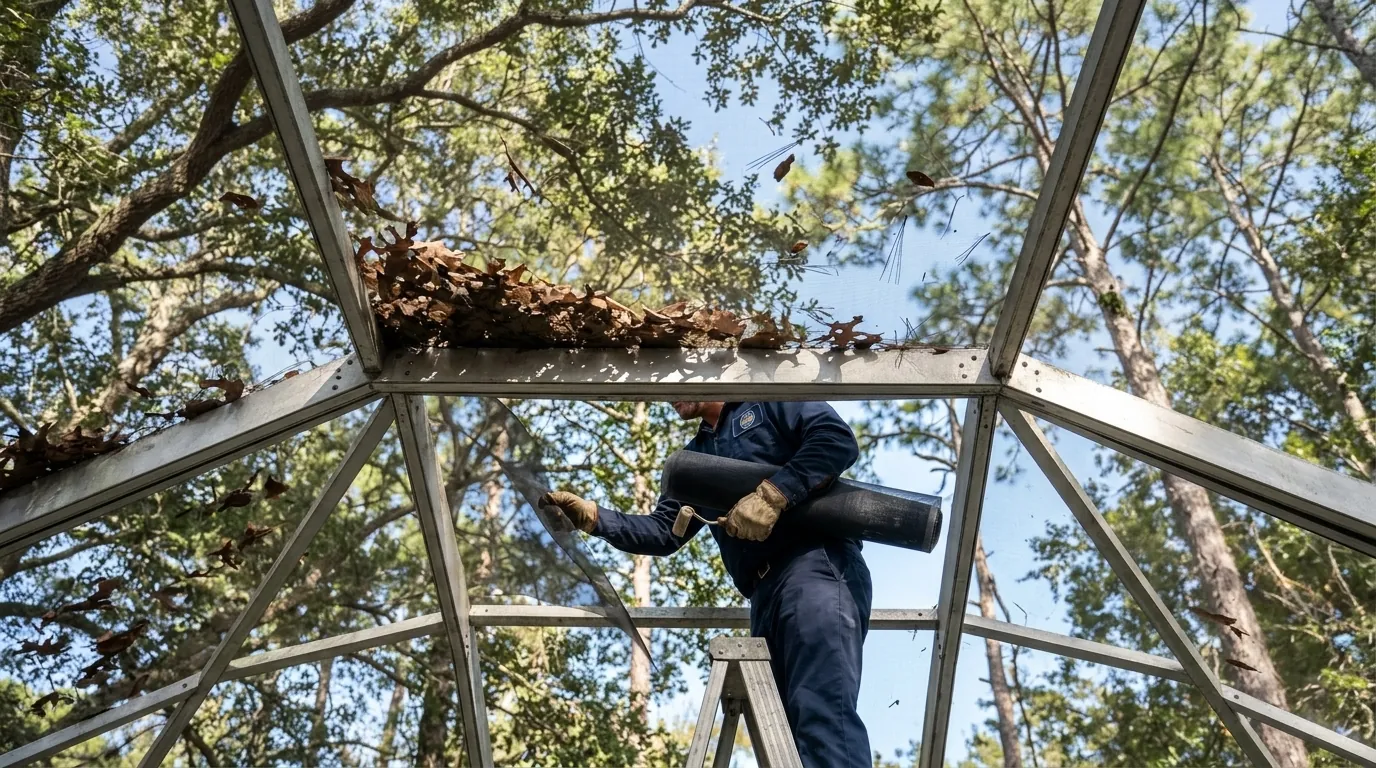
- Don't climb on the cage roof to cut screen or clear debris. Roof purlins are not walking surfaces.
- Don't cover walls with tarps or plastic sheeting. Solid coverings catch far more wind than screen.
- Don't leave loose panels flapping if you can safely remove them from the ground.
Pool Cage Hurricane Risk Around Gainesville
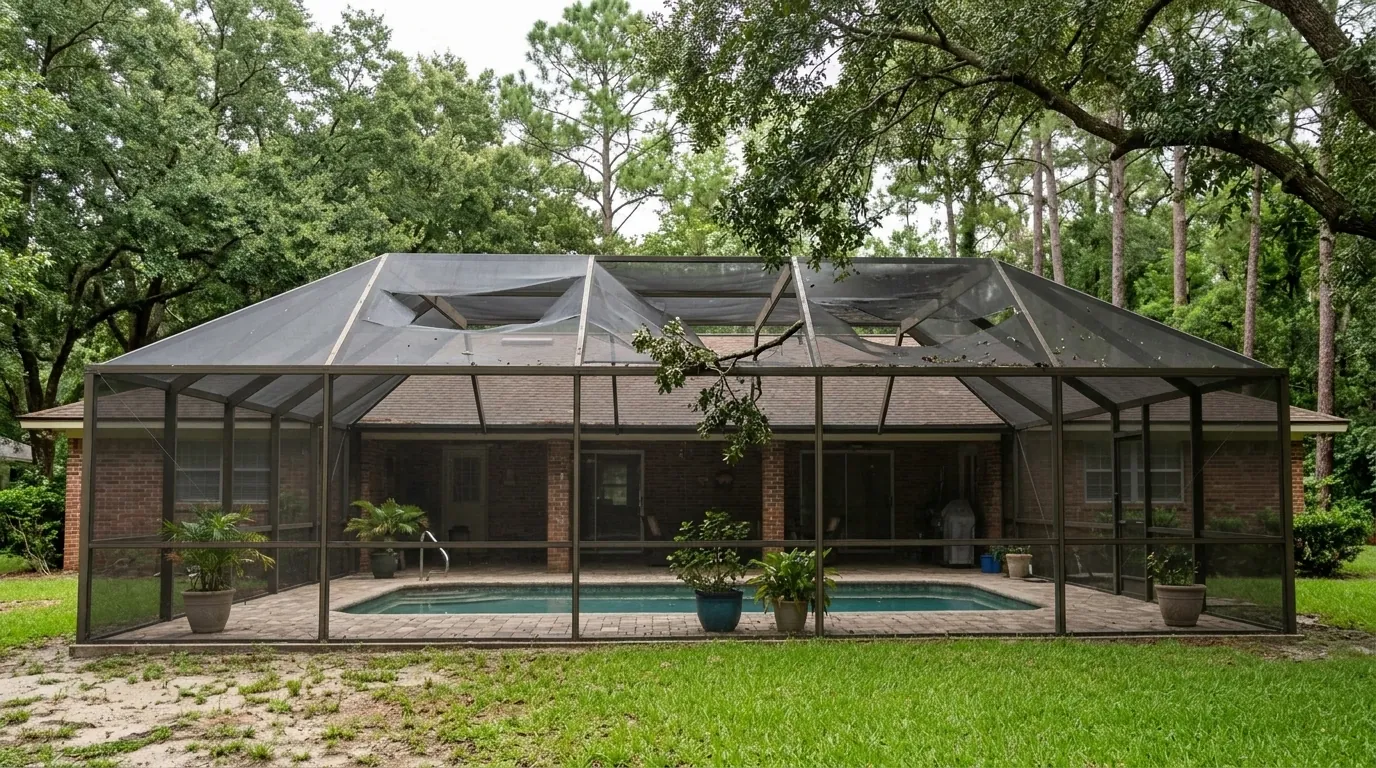
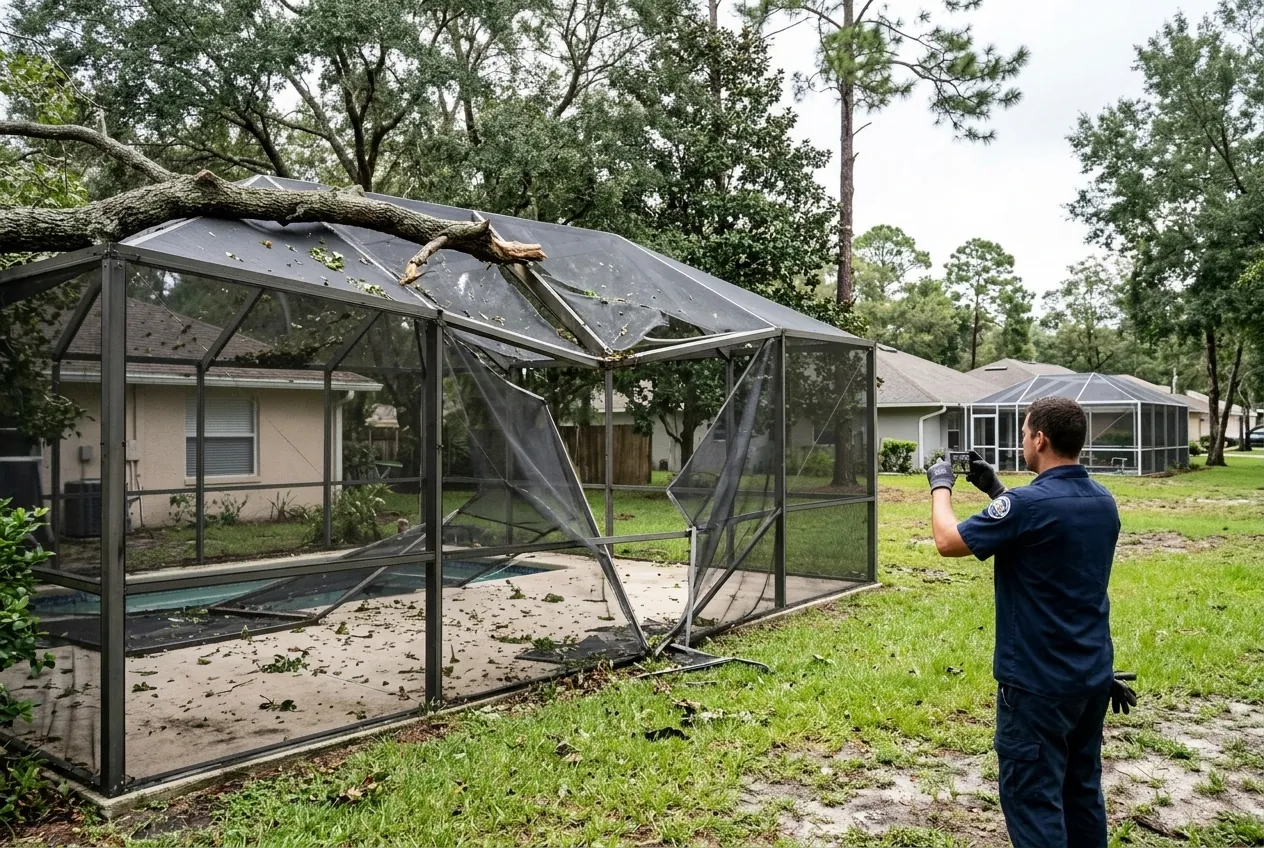
The tree canopy is the local wildcard. Neighborhoods with mature oaks and tall pines, including many around Huntington and Jonesville, face more risk from limbs than from wind pressure on the cage. Newer homes on open lots in places such as Newberry see the reverse, with more direct wind and less overhead wood. Both are worth thinking about when you decide what to trim and what to tighten.
After the Storm: Pool Cage Damage Steps
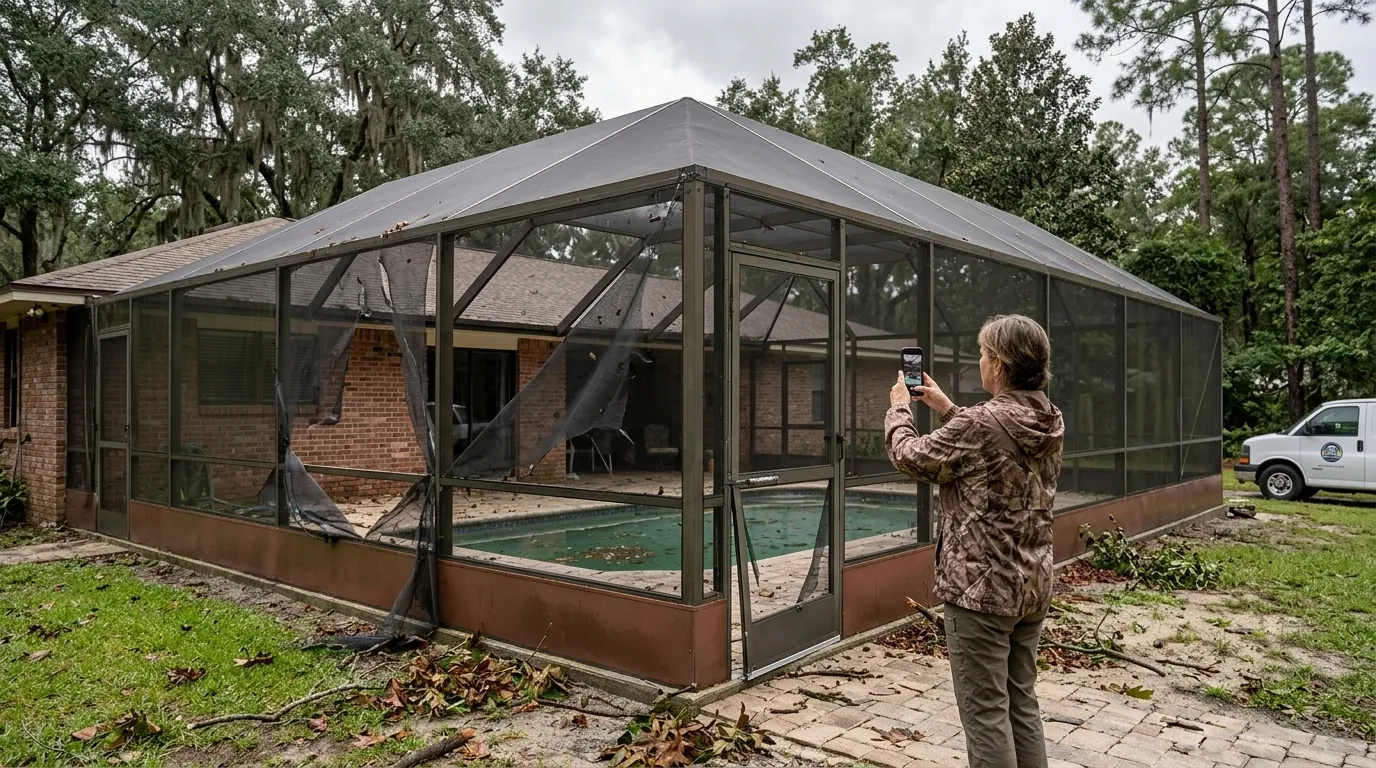
- Stay out if the frame is bent or a tree is on it. A cage under load can shift without warning. Keep kids and pets away and watch for downed power lines.
- Photograph everything first. The state's Department of Financial Services tells homeowners to record damage in pictures and video, both ahead of repairs and once they are finished.
- Prevent further damage. DFS also advises making emergency repairs needed to stop more damage and documenting them. For a cage, that might mean removing loose hanging screen or securing a swinging door, not climbing on the roof.
- Keep receipts. Save receipts for any emergency work or materials.
- Call your insurer early. Florida law sets deadlines for reporting property claims, and your hurricane deductible may differ from your regular one. See our pool cage insurance overview for the basics.
- Get a written repair scope. Itemized screen, frame and door repairs make an adjuster's job easier.
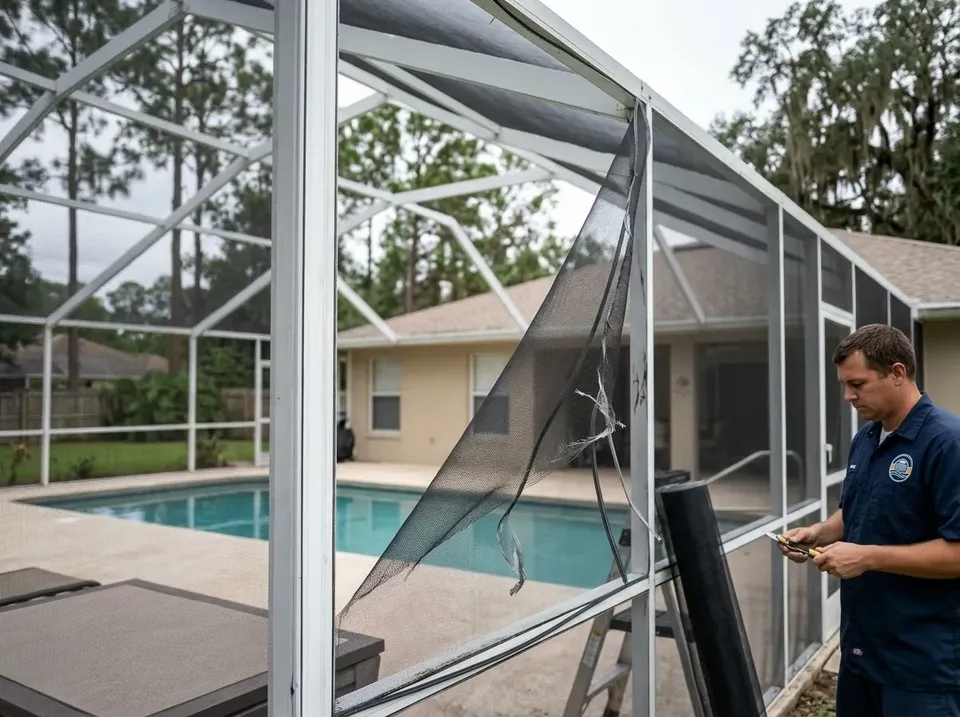
On a storm damage pool cage repair job, we photograph and list everything first, then remove damaged screen and members safely before rebuilding. If the screen survived but took a beating, our repair or rescreen guide helps you decide how far to go.
Temporary fixes that are safe to do yourself
From the ground, you can usually cut free a panel that is flapping and tearing its neighbors by running a utility knife along the spline line, then bag the loose screen. You can close and strap a door that won't latch, and pick up branches on the deck. Anything that involves a ladder against the cage, standing on the roof or pulling on a bent member is work for a crew, because a damaged frame can shift as load comes off it.
Don't let a fallen limb sit on the roof
A limb resting on a cage roof keeps loading the purlins and beams. Even if the screen looks intact, the frame can be slowly bending underneath. Get the wood off with care, from the ground or with proper rigging, and have the members checked before the next storm.
When the weather clears, request an estimate and we will document the damage, separate storm damage from older wear and give you a written price for the repair.