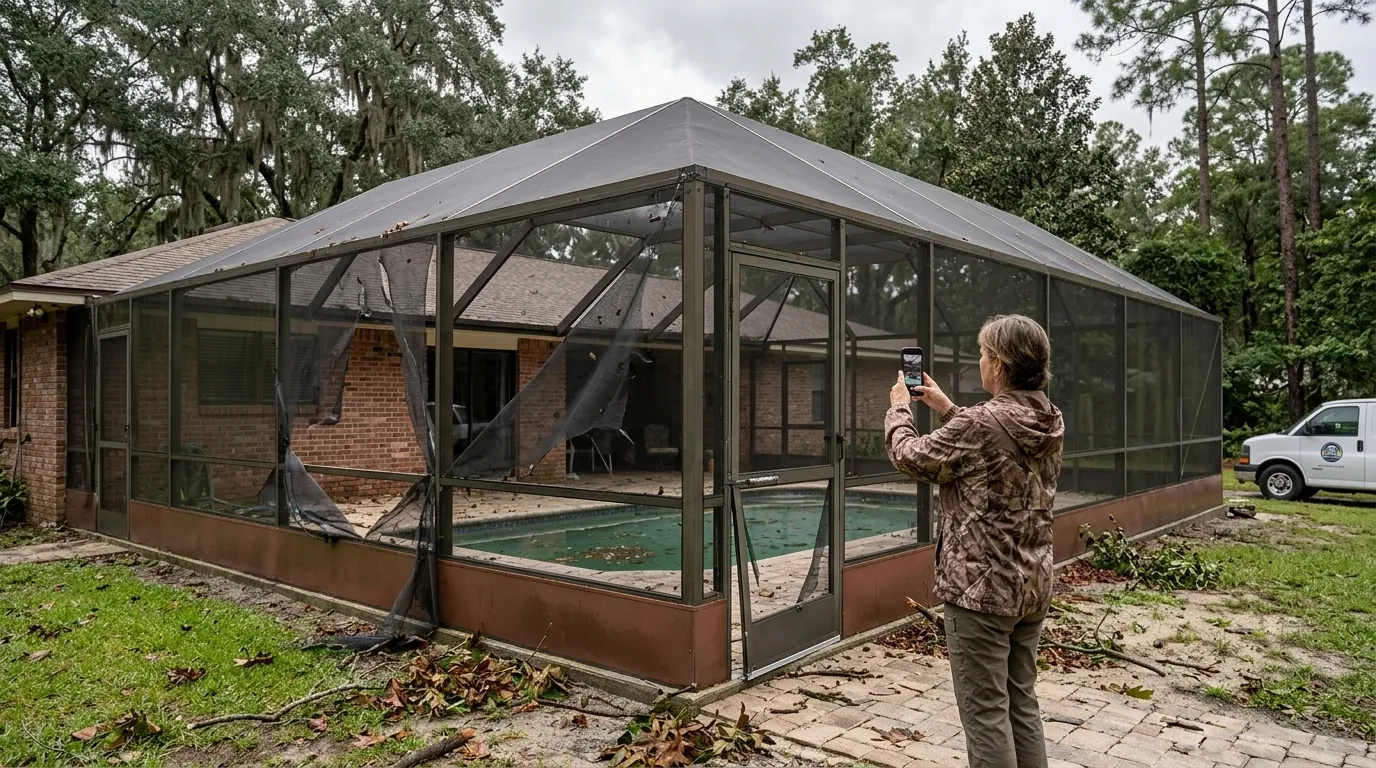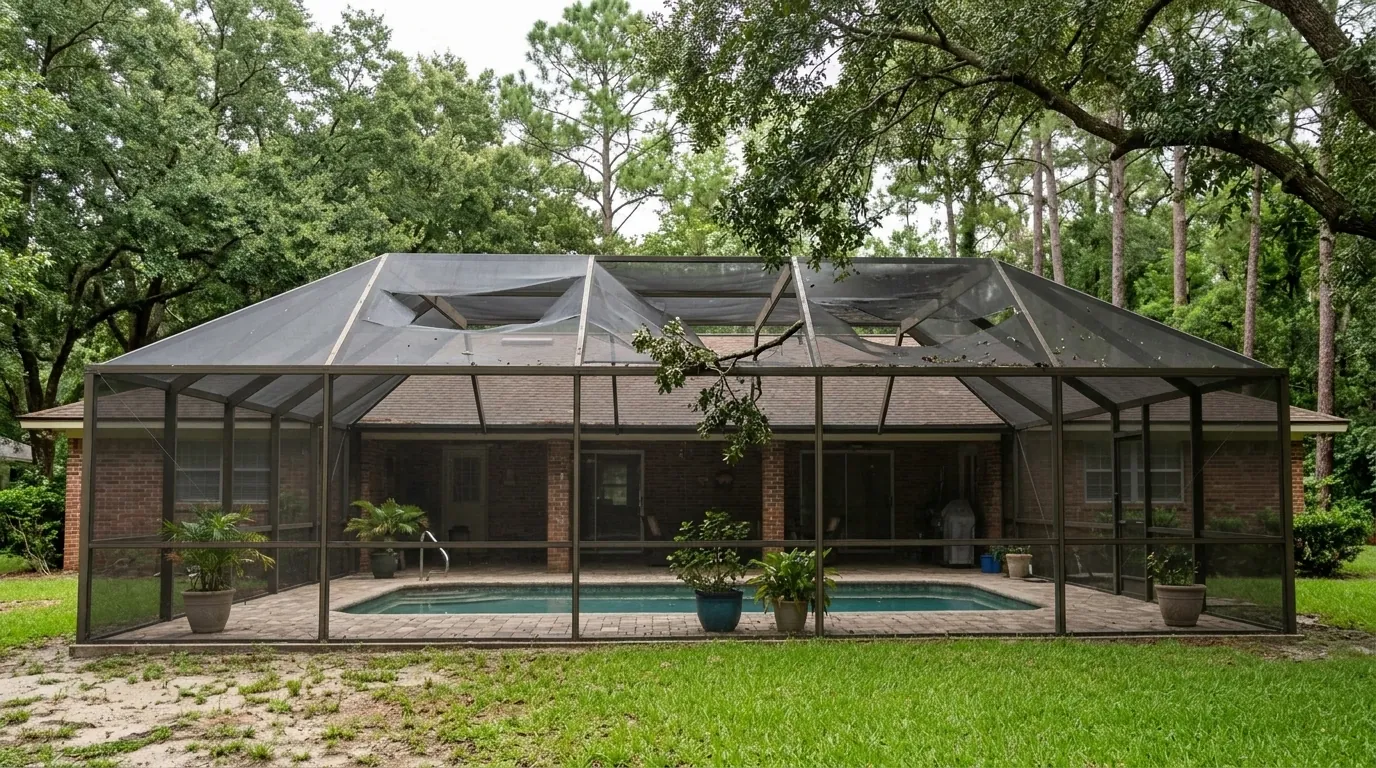
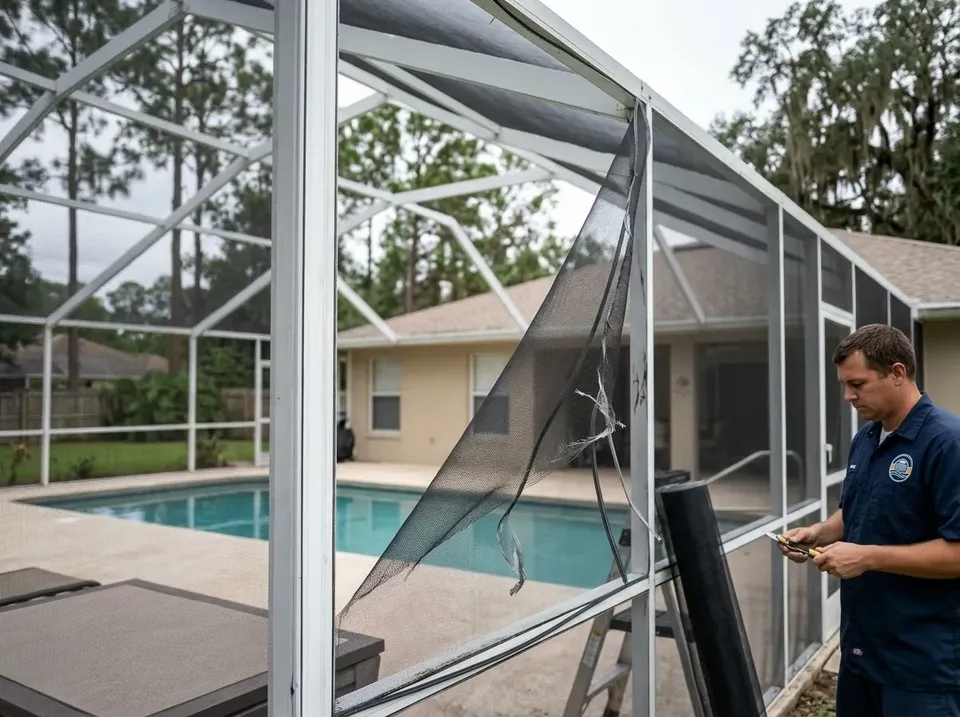
 Storm tore your screen?
 Don't see your street?
Picking a screen is mostly about what you want the cage to do. Some owners want the clearest view of the backyard. Others want to sit by the water at dusk without getting bitten, keep a large dog from walking through a wall, or block the late-day sun on the west side. This guide covers the screen types we install on Gainesville FL pool cage repair and rescreen jobs, using manufacturer specs so you can check the details yourself.
Pool Cage Screen Mesh Counts, Explained
Screen is named by its mesh count, the number of openings per inch in each direction. Phifer, one of the largest U.S. screen makers, explains how to check it: lay a one-inch square over the screen and count the openings across and down. A higher count means smaller openings, which stops smaller insects but also lets a little less air and light through.
Mesh count is only half the story. The yarn matters too. Standard pool screen is vinyl-coated fiberglass. Heavy-duty and pet screens are usually vinyl-coated polyester, which is thicker and tougher but costs more and is stiffer to install.
Pool Cage Screen Types Compared
| Screen type | Material and mesh | Best use on a cage | Typical upgrade cost |
|---|---|---|---|
| Standard 18/14 | Vinyl-coated fiberglass, charcoal or silver gray | All walls and roof panels; the default | Baseline |
| No-see-um 20/20 | Vinyl-coated fiberglass, tighter weave | Cages near wetlands, ponds or heavy shade where biting gnats are a problem | +$15 to $45 per panel |
| Heavy-duty (TuffScreen type) | Vinyl-coated polyester | Lower walls, high-traffic sides, debris-prone areas | +$15 to $45 per panel |
| Pet-resistant (PetScreen type) | Heavy coated mesh, black or grey | Bottom-row wall panels and doors that pets lean on | +$15 to $45 per panel |
| Privacy (Glas-Shield type) | Vinyl-laminated 18/14 fiberglass | Wall panels below the chair rail only, never the roof | +$15 to $45 per panel |
| Solar (SunTex type) | Vinyl-coated polyester, 80 or 90 percent | Sun-facing lanai walls and patios | +$15 to $45 per panel |
Standard 18/14 fiberglass
This is the screen on most Florida pool cages. Phifer lists its 18 x 14 pool and patio screen in charcoal and silver gray and describes it as built to handle windblown debris while stopping most insects. Charcoal is the more common pick because dark screen is easier to see through from inside the cage. It is the least expensive option and the easiest to keep tight on large roof panels.
No-see-um 20/20 screen
No-see-ums are tiny biting midges that slip through 18/14 openings. Phifer describes its 20 x 20 screen as a tightly woven vinyl-coated fiberglass that stops most small flying insects, including no-see-ums, gnats and sand flies, while still allowing ventilation and adding some daytime privacy. Owners whose yards back onto wetlands or ponds, or whose cages sit under deep oak shade where the air stays still, are the usual buyers.
Heavy-duty and pet-resistant screen
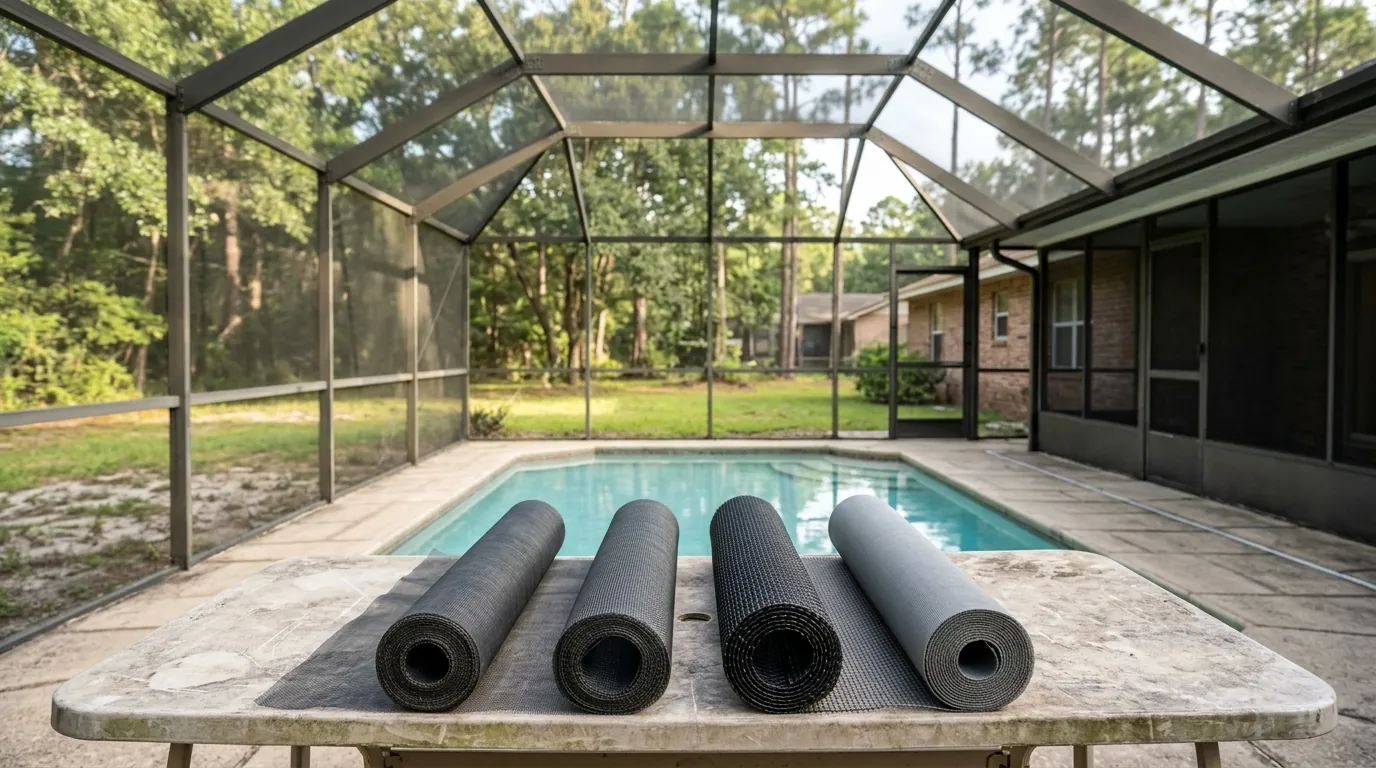
Phifer's TuffScreen is a heavy-duty vinyl-coated polyester that the company says is three times stronger than standard fiberglass and tear and puncture resistant. PetScreen is sold as resistant to clawing, pushing and chewing by most dogs and cats, with good outward visibility. Neither is truly pet-proof, and both cost more, so most owners put them on the lower wall panels and doors where the wear happens and keep standard screen above.
Privacy screen for lower walls
Privacy screen is a vinyl-laminated version of 18/14 fiberglass. Phifer's Glas-Shield is made for wall panels from the chair rail down, where it blocks the view in and keeps blowing dirt and leaves off the deck. Phifer states it is not made for roofing or horizontal use, so it should never go on a cage roof. On a lot with a close neighbor, a row of privacy panels along one wall can make a big difference.
Solar screen
Solar screens such as Phifer SunTex are vinyl-coated polyester rated to block 80 to 90 percent of the sun's heat and glare. They are much less open than insect screen, which is the point, but it also means a darker, more enclosed feel. Phifer lists porches, patios and window screens among the uses. We generally recommend solar screen for the west or south wall of a lanai rather than an entire pool cage, and we review the cage design before adding it anywhere large.
Pool Cage Screen Colors: Charcoal or Silver Gray
Color affects how a cage looks from both sides. Dark charcoal mesh absorbs light, so from a seat by the pool it nearly disappears and the yard looks sharper. From the street or a neighbor's yard, charcoal also reads darker and less shiny. Silver gray reflects more light, which can make the cage look brighter from outside but a little hazier when you look out through it. Most owners pick charcoal for that reason, and it hides dirt better between cleanings.
If you live under deed restrictions, color is often the one detail the association cares about. A switch from gray to charcoal, or the reverse, is worth running past the board before the crew orders material.
Doors and kick panels
A screen door gets handled far more than any wall panel, opened with an elbow, bumped by coolers and nosed by dogs all day. Many owners put pet-resistant or heavy-duty mesh in door panels even when the rest of the cage stays standard. The solid kick plate at the base of each wall and door does the same job lower down, keeping feet, toys and pool equipment from punching through the bottom row. A dented or missing kick plate is worth fixing during any screen work.
Choosing Pool Cage Screen for Gainesville Yards
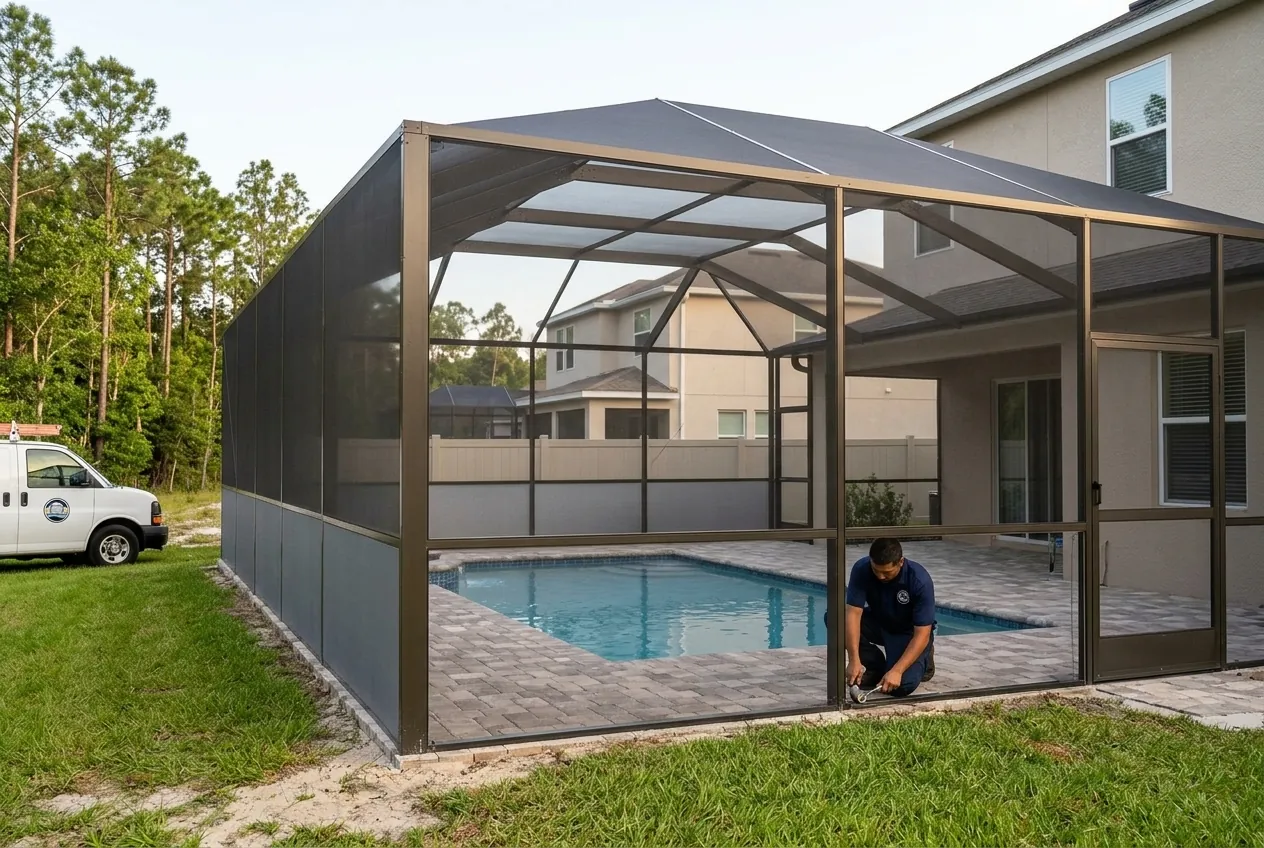
Local conditions point most owners toward a mix rather than one screen for the whole cage. A few patterns we see across the area:
- Heavy canopy. Under oaks and pines, the roof takes falling twigs and acorns. Standard 18/14 on the roof with heavier screen low on the walls is a common, sensible split.
- Wet ground nearby. Yards near ponds, sinks and wooded drainage areas get more biting insects at dusk. No-see-um screen is worth pricing on the walls you sit beside.
- Dogs. Pet-resistant screen on the bottom row of panels and on the doors handles most of the damage at a lower cost than doing every panel.
- Close neighbors. Newer lots in communities like Oakmont and Kanapaha often sit near the house next door, so privacy screen on one wall is a frequent request. Check your HOA rules on screen color first.
Pool Cage Screen Upgrades and What They Cost
Expect each upgraded panel to run about $15 to $45 above the plain charcoal 18/14 price. You don't have to upgrade the whole cage. Most owners pick the panels that do the most work, which keeps the cost in line. Our screen wall upgrades page explains how we price mixed jobs, and the best time to switch screen types is during a full pool cage rescreening, when every panel is open anyway.
If you are only replacing a few torn panels, keep in mind that a different screen type will look different from its neighbors. That is fine on a back wall and less fine on the side you see from the kitchen. For lanais and porches, the same screen choices apply, covered on our lanai and patio rescreening page.
How Screen Type Affects Pool Cage Screen Life
Screen type also affects how long the job lasts. Phifer says its PetScreen and TuffScreen are its most durable screens, and TuffScreen carries a 10-year manufacturer warranty. Cheap imported screen, on the other hand, can turn brittle years early. We cover the full picture in our screen lifespan article, and our rescreen cost guide shows how screen choice fits into a full quote.
Not sure which mix fits your cage? Ask for a free estimate and we will bring samples so you can see each screen against your own backyard before you decide.